
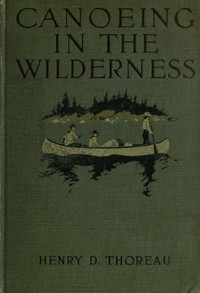
Canoeing in the wilderness
Written by Henry David Thoreau
Chaptra reads alongside you — AI insights, chapter breakdowns and reader discussions for every book. Join free
About this book
Reading guide
Themes, characters and key ideas in Canoeing in the wilderness, written by Chaptra AI.
- about 8 hours
- advanced
- reflective
- observational
- serene
Henry David Thoreau's "Canoeing in the Wilderness" meticulously chronicles his third expedition into the untamed Maine woods, a journey primarily undertaken by canoe with a companion and an experienced Penobscot guide, Joseph Polis. More than a mere travelogue, the narrative serves as a profound meditation on humanity's intricate relationship with the natural world, emphasizing themes of simplicity, solitude, and the intrinsic value of wilderness. Thoreau vividly describes the raw beauty of the landscape, the challenges of exploration, and the invaluable insights gained from both direct observation and his guide's deep indigenous knowledge. The book ultimately blends adventure with philosophical inquiry, urging readers to reconsider their place within and responsibility towards the wild. It stands as a foundational text in American nature writing, showcasing Thoreau's enduring legacy as an environmental philosopher.
“I went to the woods because I wished to live deliberately, to front only the essential facts of life, and see if I could not learn what it had to teach, and not, when I came to die, discover that I had not lived.”
Key themes
- Humanity's Relationship with Nature
- This is the core theme, exploring how humans interact with, perceive, and are shaped by the natural world. Thoreau advocates for a relationship of respect, observation, and immersion, rather than exploitation or conquest. He sees nature as a source of truth, spirituality, and renewal, essential for human well-being and understanding.
- Simplicity and Solitude
- Thoreau champions a life stripped of unnecessary material possessions and social distractions, believing that true understanding and connection to oneself and the world can only be achieved through simplicity and the quiet contemplation afforded by solitude. The wilderness journey provides the perfect setting to practice and affirm these ideals.
- The Value of Observation and Experience
- Thoreau emphasizes direct, sensory experience and meticulous observation as the primary means of acquiring true knowledge and understanding, contrasting with abstract intellectualism or secondhand information. The wilderness journey is presented as a laboratory for such empirical learning, where every detail holds significance.
Worth discussing
How does Thoreau define 'wilderness' and how does his perspective resonate or conflict with contemporary environmental views?
Chapter-by-chapter breakdowns, character arcs and the full thematic analysis come with a free account.
Discussions
No one has started one yet
Questions this book opens up
No discussions yet
Be the first to start a discussion about this book!
Sign up to start the discussionReviews
No reviews yet
Be the first to review this book!