
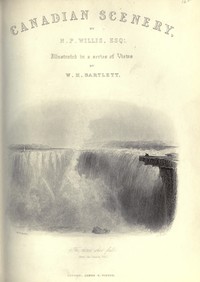
Canadian Scenery, Volume 2 (of 2)
Written by Nathaniel Parker Willis
Chaptra reads alongside you — AI insights, chapter breakdowns and reader discussions for every book. Join free
About this book
Reading guide
Themes, characters and key ideas in Canadian Scenery, Volume 2 (of 2), written by Chaptra AI.
- about 8 hours
- intermediate
- exploratory
- descriptive
- historical
Nathaniel Parker Willis's "Canadian Scenery, Volume 2 (of 2)" is a mid-19th century descriptive travelogue that immerses readers in the natural beauty and cultural fabric of Canada, particularly focusing on Montreal, Quebec, and the Eastern Townships. Willis employs vivid imagery to depict the diverse landscapes, from the lush St. Lawrence River banks to burgeoning urban centers, and offers keen observations on societal dynamics. The narrative commences with an extensive exploration of Montreal's district, highlighting its geographical features, agricultural potential, and commercial significance. It further delves into public edifices and institutions, setting the stage for subsequent discussions on Quebec and other regions. Ultimately, the work provides a rich, contemporary context for understanding 19th-century Canadian scenery, life, and the prospects for emigration and settlement.
“The St. Lawrence, magnificent artery of this vast dominion, flows with a grandeur that rivals the most fabled rivers of the Old World, its banks a tapestry of verdant fields and burgeoning settlements.”
Key themes
- Exploration of Landscape and Nature
- Central to the book, this theme explores the vast and varied natural beauty of Canada, from the majestic St. Lawrence River to the fertile agricultural lands and picturesque townships. Willis's vivid descriptions highlight the grandeur, potential, and untamed character of the Canadian wilderness and its cultivated areas.
- Emigration and Settlement
- Willis explicitly addresses the prospects for emigration and settlement in Canada, framing the country as a land of opportunity for newcomers. This theme underscores the demographic and economic aspirations of the period, presenting Canada as a viable destination for those seeking new lives and agricultural potential.
- Historical Documentation and 19th-Century Perspective
- The book serves as a valuable historical document, offering a snapshot of Canadian life, landscape, and societal dynamics in the mid-19th century. Willis's observations provide primary source material for understanding the period's attitudes, infrastructure, and the emerging identity of British North America.
Worth discussing
How does Willis's perspective as an American observer influence his descriptions of Canadian identity and landscape?
Chapter-by-chapter breakdowns, character arcs and the full thematic analysis come with a free account.
Discussions
No one has started one yet
Questions this book opens up
No discussions yet
Be the first to start a discussion about this book!
Sign up to start the discussionReviews
No reviews yet
Be the first to review this book!