
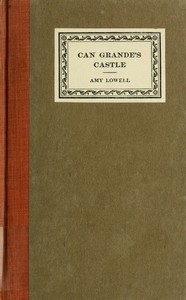
Can Grande's castle
Written by Amy Lowell
Chaptra reads alongside you — AI insights, chapter breakdowns and reader discussions for every book. Join free
About this book
Reading guide
Themes, characters and key ideas in Can Grande's castle, written by Chaptra AI.
- about 8 hours
- advanced
- reflective
- historical
- poignant
Amy Lowell's "Can Grande's Castle" is a pivotal early 20th-century collection that transcends traditional war poetry, instead exploring the profound and often subtle impacts of conflict on the human spirit and historical memory. Through a blend of vivid Imagist techniques and a polyphonic prose style, Lowell juxtaposes the brutal realities of war with the enduring beauty of nature and the weight of historical cycles. The poems delve into the fragility of civilization and the persistent nature of human conflict, inviting readers into a reflective dialogue on history, personal experience, and the artist's crucial role in interpreting these complex truths. It establishes a contemplative mood, using rich imagery and historical allusions to convey deeper philosophical insights into humanity's recurring struggles.
“"The past is not dead; it is not even past. It lies latent, a coiled serpent within the living moment."”
Key themes
- The Impact of War and Conflict
- This theme explores not just the direct violence of war, but its lasting psychological, cultural, and historical repercussions. Lowell delves into how conflict shapes societies, individuals, and the very memory of human experience, often through historical vignettes and reflections on past battles and their legacies.
- The Cyclical Nature of History
- Lowell frequently examines history not as a linear progression but as a series of repeating patterns, particularly concerning human ambition, conflict, and the rise and fall of empires. The poems suggest that humanity is perpetually caught in a loop of creation and destruction, with lessons often unlearned.
- Nature's Enduring Beauty vs. Human Destructiveness
- A prominent theme is the stark contrast between the serene, timeless beauty of the natural world and the fleeting, destructive endeavors of humankind. Nature often serves as a silent witness to human conflict, highlighting the transience of human power and the permanence of the natural order.
Worth discussing
How does Lowell's 'polyphonic prose' contribute to the collection's thematic exploration of history and conflict?
Chapter-by-chapter breakdowns, character arcs and the full thematic analysis come with a free account.
Discussions
No one has started one yet
Questions this book opens up
No discussions yet
Be the first to start a discussion about this book!
Sign up to start the discussionReviews
No reviews yet
Be the first to review this book!