
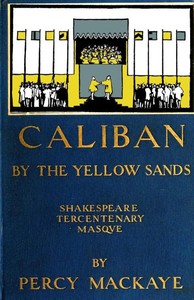
Caliban by the Yellow Sands: A Community Masque of the Art of the Theatre
Written by Percy MacKaye
Chaptra reads alongside you — AI insights, chapter breakdowns and reader discussions for every book. Join free
About this book
Reading guide
Themes, characters and key ideas in Caliban by the Yellow Sands: A Community Masque of the Art of the Theatre, written by Chaptra AI.
- about 8 hours
- advanced
- mysterious
- philosophical
- symbolic
Percy MacKaye's "Caliban by the Yellow Sands" is an early 20th-century community masque commemorating the tercentenary of Shakespeare's death, drawing heavily from "The Tempest." It centers on Caliban's journey from primitive desires within the oppressive cave of Setebos to a nascent understanding of freedom and art's transformative power. The narrative explores themes of liberation, the collective human spirit, and the redemptive potential of theatre, moving from grotesque, base instincts to poetic enlightenment. Through the interplay of characters like Caliban, Ariel, and Sycorax, and a chorus of spirits, the masque stages a symbolic ascent from primal confinement to the celebratory expression of art.
“From Setebos' dark thrall, my spirit strains, a captive bird that beats against its cage.”
Key themes
- The Transformative Power of Art and Theatre
- The core message of the masque, celebrating theatre as a powerful force capable of elevating the human spirit, fostering understanding, and uniting communities. Art, in its various forms (music, poetry, dance), is presented as the means to overcome primitive instincts and achieve enlightenment, mirroring the commemorative purpose for Shakespeare.
- Freedom vs. Confinement
- This theme is central, explored through Ariel's literal and spiritual yearning for liberation from his bonds, and Caliban's struggle against his own inherent nature and the oppressive influence of Setebos and Sycorax. The masque suggests that true freedom is not just physical but also artistic and intellectual, a release from ignorance and base instincts.
- Humanity's Collective Spirit and Unity
- Emphasized by the 'community masque' format and the role of the chorus, this theme suggests that human potential and liberation are best realized through collective effort and shared experience. Theatre becomes a symbol of this unity, bringing diverse individuals together in a common pursuit of beauty and truth.
Worth discussing
How does MacKaye's portrayal of Caliban expand upon or diverge from Shakespeare's original character in 'The Tempest'?
Chapter-by-chapter breakdowns, character arcs and the full thematic analysis come with a free account.
Discussions
No one has started one yet
Questions this book opens up
No discussions yet
Be the first to start a discussion about this book!
Sign up to start the discussionReviews
No reviews yet
Be the first to review this book!