
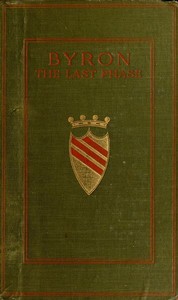
Byron: The Last Phase
Written by Richard Edgcumbe
Chaptra reads alongside you — AI insights, chapter breakdowns and reader discussions for every book. Join free
About this book
Reading guide
Themes, characters and key ideas in Byron: The Last Phase, written by Chaptra AI.
- about 10 hours
- advanced
- historical
- biographical
- introspective
Richard Edgcumbe's "Byron: The Last Phase" is an early 20th-century biographical work that meticulously re-examines the final years of Lord Byron's life, primarily focusing on his transformative experiences in Italy and Greece around 1821 onwards. The book challenges the prevailing public image of Byron as a notorious figure, instead presenting a more nuanced portrait of a man who evolved significantly, displaying increased sociability and compassion. Edgcumbe delves into previously unexplored aspects of Byron's character and relationships, including his interactions with friends and lovers, and his engagement with the Greek War of Independence. Through detailed accounts of his physical appearance and psychological state, the biography aims to shed light on Byron's complex inner world and his contributions during this pivotal period of his life.
“"The notorious Byron, it seemed, had begun to shed his infamous skin, revealing a man far more amenable and deeply compassionate than legend allowed."”
Key themes
- Personal Transformation and Redemption
- This is the core theme, exploring how Byron, a figure synonymous with scandal and romantic angst, undergoes a profound personal evolution in his later years. Edgcumbe argues that Byron visibly changed, becoming more compassionate and sociable, and sought a more meaningful existence, culminating in his dedication to the Greek War of Independence. The theme posits that individuals can evolve beyond their past reputations and find purpose through self-sacrifice.
- Public Persona vs. Private Self
- The biography meticulously dissects the divergence between the notorious public image of Lord Byron and the more nuanced, evolving private individual. Edgcumbe aims to reveal the 'real' Byron, hidden beneath layers of scandal and literary myth. This theme explores the burden of public perception and the struggle to live authentically when one's identity has been largely constructed by society and media.
- Legacy and Historical Reinterpretation
- Edgcumbe's work is inherently an act of historical reinterpretation, challenging existing narratives about Byron and attempting to shape his enduring legacy. The book argues for a more charitable and comprehensive view of Byron, emphasizing his later contributions and personal growth rather than solely his earlier scandalous escapades. This theme explores how historical figures are remembered and how their stories can be revised or expanded through new research and perspectives.
Worth discussing
How does Edgcumbe's portrayal of Byron's 'last phase' challenge or confirm your preconceived notions of the poet?
Chapter-by-chapter breakdowns, character arcs and the full thematic analysis come with a free account.
Discussions
No one has started one yet
Questions this book opens up
No discussions yet
Be the first to start a discussion about this book!
Sign up to start the discussionReviews
No reviews yet
Be the first to review this book!