
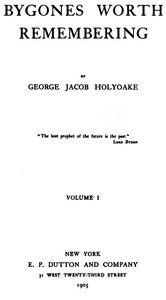
Bygones Worth Remembering, Vol. 1 (of 2)
Written by George Jacob Holyoake
Chaptra reads alongside you — AI insights, chapter breakdowns and reader discussions for every book. Join free
About this book
Reading guide
Themes, characters and key ideas in Bygones Worth Remembering, Vol. 1 (of 2), written by Chaptra AI.
- about 10 hours
- advanced
- reflective
- philosophical
- historical
George Jacob Holyoake's "Bygones Worth Remembering, Vol. 1" is an early 20th-century autobiography deeply intertwined with historical commentary, asserting the critical importance of memory for societal progress. Holyoake passionately argues against dismissing past events, believing that understanding historical mistakes and successes is vital for personal and collective growth. The volume details his early life, intellectual development, and engagement with pivotal socio-political movements like Chartism, alongside the influence of thinkers such as Robert Owen. It establishes a philosophical foundation for reasoned inquiry into societal issues, presenting his life as a testament to the enduring lessons gleaned from history.
“To let bygones be bygones is to repeat the errors of the past; true progress demands remembrance and learning.”
Key themes
- The Importance of History and Memory
- This is the foundational theme of the book, as articulated in its title and Holyoake's opening philosophical stance. He argues vehemently against forgetting the past, positing that understanding historical events, mistakes, and lessons is crucial for personal and societal growth and progress. Memory is not a burden but a vital tool for informed action.
- Social Reform and Progress
- Holyoake's autobiography is deeply rooted in the pursuit of social reform. His life and reflections are presented as part of a larger struggle for a more just and equitable society. He explores the mechanisms of social change, the challenges faced by reformers, and the ideals that drive movements like Chartism and Owenite socialism.
- Reasoned Dialogue and Inquiry
- Holyoake champions the power of rational discourse and thorough investigation as the means to achieve understanding and progress. He positions himself as an advocate for open inquiry into societal issues, emphasizing the importance of evidence-based reasoning over dogma or uncritical acceptance of tradition.
Worth discussing
Holyoake argues against 'letting bygones be bygones.' To what extent do you agree or disagree with this philosophy in personal and public life?
Chapter-by-chapter breakdowns, character arcs and the full thematic analysis come with a free account.
Discussions
No one has started one yet
Questions this book opens up
No discussions yet
Be the first to start a discussion about this book!
Sign up to start the discussionReviews
No reviews yet
Be the first to review this book!