
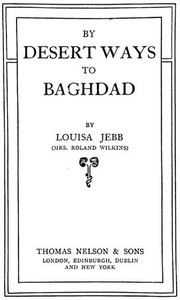
By Desert Ways to Baghdad
Written by Louisa Jebb Wilkins
Chaptra reads alongside you — AI insights, chapter breakdowns and reader discussions for every book. Join free
About this book
Reading guide
Themes, characters and key ideas in By Desert Ways to Baghdad, written by Chaptra AI.
- about 10 hours
- intermediate
- adventurous
- exploratory
- reflective
Louisa Jebb Wilkins's "By Desert Ways to Baghdad" is an early 20th-century travel narrative chronicling her adventurous journey through Asia Minor and Mesopotamia to Baghdad. Accompanied by a companion seeking health, Wilkins blends personal reflections with vivid cultural observations as they navigate unfamiliar landscapes and interact with local populations. The book captures the initial excitement of setting out from Brusa, detailing their experiences camping, confronting challenges like brigands, and exploring significant historical and religious sites. Ultimately, the narrative delves into the personal growth and deeper meaning derived from their immersive adventure, contrasting the 'civilized' world with the untamed beauty of the East.
“"The very air of Brusa seemed to hum with the promise of adventure, a freedom unknown to the settled life we left behind."”
Key themes
- Adventure and Exploration
- The core theme of the book, driven by the author's desire to traverse unknown lands and experience new cultures. It explores the human impulse for discovery, the excitement of the journey, and the challenges inherent in venturing into the 'untamed' world.
- Cultural Encounter and Observation
- Wilkins meticulously details her interactions with local people, observing their customs, traditions, and daily lives. This theme explores the challenges and rewards of cross-cultural communication, understanding, and the impact of differing ways of life.
- Personal Growth and Transformation
- The journey serves as a catalyst for internal change and self-discovery for the author. Confronting challenges, adapting to new environments, and reflecting on profound experiences lead to a deeper understanding of oneself and the human condition.
Worth discussing
How does Wilkins's narrative challenge or reinforce typical perceptions of the Middle East in the early 20th century?
Chapter-by-chapter breakdowns, character arcs and the full thematic analysis come with a free account.
Discussions
No one has started one yet
Questions this book opens up
No discussions yet
Be the first to start a discussion about this book!
Sign up to start the discussionReviews
No reviews yet
Be the first to review this book!