
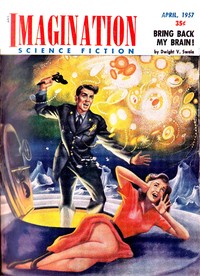
Bring Back My Brain!
Written by Dwight V. Swain
Chaptra reads alongside you — AI insights, chapter breakdowns and reader discussions for every book. Join free
About this book
Reading guide
Themes, characters and key ideas in Bring Back My Brain!, written by Chaptra AI.
- about 8 hours
- intermediate
- mysterious
- perilous
- disorienting
Dwight V. Swain's "Bring Back My Brain!" is a mid-20th century science fiction novel plunging protagonist Clark Dane into a bewildering struggle against a formidable mental menace. Awakening with amnesia, Dane is tormented by visions and a powerful urge to submit to an unknown master, setting him on a perilous journey. This adventure propels him through space, leading to encounters with the enigmatic Kalquoi aliens and the ancient Sandoz Shaft. As Dane navigates a hostile universe, his quest to reclaim his lost identity and autonomy intensifies, exploring profound questions of knowledge, power, and free will amidst a backdrop of cosmic threats.
“(Specific quotes cannot be provided without access to the full text of the novel.)”
Key themes
- Identity and Amnesia
- The central theme revolves around Clark Dane's struggle to reclaim his lost memories and understand who he is. Amnesia is not just a plot device but a profound challenge to his very being, forcing him to reconstruct his identity under extreme duress. The narrative explores how memory shapes self and what happens when that foundation is shattered.
- Free Will vs. Servitude
- This theme is explicitly highlighted by Dane's 'compelling urge to submit to an unknown master.' It explores the struggle against external and internal forces that seek to control an individual's will, raising questions about autonomy, obedience, and the strength required to resist psychological manipulation. It's a battle for mental and spiritual freedom.
- Knowledge and Power
- The summary explicitly mentions an 'exploration of knowledge, power.' This suggests that Dane's quest for his memories is also a quest for knowledge that grants power, both over his own mind and over his circumstances. Conversely, the antagonists likely wield power through their knowledge (or control of it), and Dane's amnesia represents a profound lack of both.
Worth discussing
How does amnesia function as more than just a plot device in Clark Dane's story?
Chapter-by-chapter breakdowns, character arcs and the full thematic analysis come with a free account.
Discussions
No one has started one yet
Questions this book opens up
No discussions yet
Be the first to start a discussion about this book!
Sign up to start the discussionReviews
No reviews yet
Be the first to review this book!