
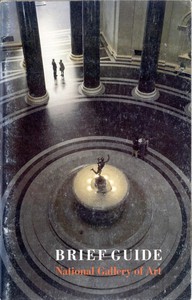
Brief guide : $b National Gallery of Art
Written by National Gallery of Art (U.S.)
Chaptra reads alongside you — AI insights, chapter breakdowns and reader discussions for every book. Join free
About this book
Reading guide
Themes, characters and key ideas in Brief guide : $b National Gallery of Art, written by Chaptra AI.
- about 3 hours
- intermediate
- informative
- educational
- historical
The "Brief guide : National Gallery of Art" serves as an essential companion for visitors to the prestigious National Gallery of Art in Washington, D.C. It offers a curated overview of the museum's vast collection, highlighting key masterpieces and significant works across various art historical periods. The guide is designed to enhance the visitor experience by providing concise descriptions, historical context, and insights into the featured artworks and artists. Its primary purpose is to orient visitors and offer a structured pathway through the gallery's diverse holdings, making complex art history accessible.
“"The National Gallery of Art stands as a testament to the enduring power of human creativity, housing a collection that spans centuries and continents."”
Key themes
- The Evolution of Western Art History
- The guide implicitly charts the chronological and stylistic progression of Western art, from early religious works through the Renaissance, Baroque, Impressionist, and modern movements. It showcases how artistic styles, techniques, and thematic concerns have developed and transformed across centuries, reflecting changing societal values, philosophical ideas, and technological advancements.
- Curatorial Interpretation and Institutional Representation
- The 'brief guide' itself is an artifact of curatorial choice, reflecting the National Gallery of Art's decisions on what constitutes its most significant or representative works. It highlights the power of institutions to shape public understanding and perception of art history by selecting, framing, and interpreting artworks for a broad audience. The guide's content and structure are a curated narrative of the collection.
- The Interplay of Art, History, and Culture
- The guide consistently places artworks within their broader historical, cultural, and social contexts. It often explains how historical events, religious beliefs, philosophical movements, and societal structures influenced the creation and meaning of art. This theme emphasizes that art is not created in a vacuum but is deeply embedded in the human experience and its surrounding world.
Worth discussing
How does a 'brief guide' influence a visitor's experience and interpretation of an art museum's collection, compared to a self-guided exploration without one?
Chapter-by-chapter breakdowns, character arcs and the full thematic analysis come with a free account.
Discussions
No one has started one yet
Questions this book opens up
No discussions yet
Be the first to start a discussion about this book!
Sign up to start the discussionReviews
No reviews yet
Be the first to review this book!