
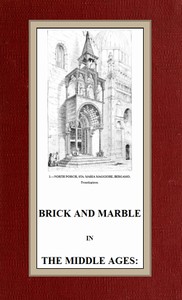
Brick and Marble in the Middle Ages: Notes of Tours in the North of Italy
Written by George Edmund Street
Chaptra reads alongside you — AI insights, chapter breakdowns and reader discussions for every book. Join free
About this book
Reading guide
Themes, characters and key ideas in Brick and Marble in the Middle Ages: Notes of Tours in the North of Italy, written by Chaptra AI.
- about 8 hours
- advanced
- scholarly
- descriptive
- appreciative
George Edmund Street's "Brick and Marble in the Middle Ages" is a mid-19th-century architectural travelogue detailing his extensive tours through northern Italy. The book serves as a scholarly exploration of Italian Gothic architecture, focusing on the distinctive use and combination of brick and marble in construction. Street's narrative blends personal observations with meticulous architectural analysis, charting his journey from initial reflections on historical context to detailed examinations of various sites. It aims to illuminate the unique artistic features and influences that differentiate Italian Gothic from its northern European counterparts, offering readers both a sense of adventurous discovery and profound scholarly insight into the region's medieval architectural heritage.
“The true spirit of an age is often best revealed not in its grand pronouncements, but in the enduring lines of its architecture, a silent testament to its aspirations.”
Key themes
- Architectural Observation and Analysis
- The core theme of the book, focusing on the meticulous process of studying architectural forms, materials, and construction techniques. Street emphasizes the importance of direct observation and detailed analysis to understand the historical and artistic significance of buildings.
- The Interplay of Materials (Brick and Marble)
- This theme, central to the book's title, explores how the choice and combination of building materials profoundly influence the aesthetic, structural, and symbolic qualities of architecture. Street meticulously details how brick and marble were used, contrasted, and integrated.
- Historical Context and Evolution of Style
- Street explores how architectural styles are not static but evolve over time, influenced by historical events, cultural shifts, and the availability of resources. He places Italian Gothic within its specific historical trajectory, distinct from other European Gothic traditions.
Worth discussing
How does Street's personal journey enhance or detract from the scholarly analysis of architecture?
Chapter-by-chapter breakdowns, character arcs and the full thematic analysis come with a free account.
Discussions
No one has started one yet
Questions this book opens up
No discussions yet
Be the first to start a discussion about this book!
Sign up to start the discussionReviews
No reviews yet
Be the first to review this book!