
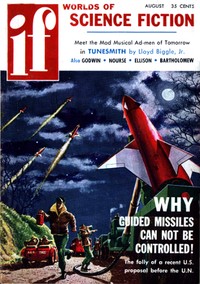
Bramble Bush
Written by Alan Edward Nourse
Chaptra reads alongside you — AI insights, chapter breakdowns and reader discussions for every book. Join free
About this book
Reading guide
Themes, characters and key ideas in Bramble Bush, written by Chaptra AI.
- about 8 hours
- intermediate
- mysterious
- thought-provoking
- tense
Alan Edward Nourse's "Bramble Bush" delves into the nascent field of psionics, focusing on the delicate emergence of psychic abilities in children and the potential for adult influence to stifle this growth. Dr. David Lessing leads research at the Hoffman Medical Center's special facility, "the Farm," dedicated to understanding and nurturing these emergent potentials. However, his theories are dramatically challenged after an incident involving a young boy named Tommy, forcing Lessing to re-evaluate his authoritative scientific stance. The narrative explores the tension between groundbreaking discovery and established scientific skepticism, represented by Dr. Melrose, as Lessing confronts the ethical implications of his research and the limits of his own knowledge. Ultimately, the novel questions the very nature of scientific authority and the unpredictable path of genuine discovery, prompting Lessing to reconsider his upcoming publication.
“"The greatest danger in science is not ignorance, but the illusion of knowledge."”
Key themes
- Scientific Authority vs. Discovery
- This theme explores the tension between established scientific paradigms and the unpredictable nature of genuine discovery. Dr. Lessing initially embodies scientific authority, confident in his theories, but is forced to confront how rigid adherence to his own 'knowledge' can blind him to new truths. The novel questions whether true progress requires dismantling existing frameworks rather than merely adding to them.
- Ethics of Experimentation and Human Potential
- The novel critically examines the moral responsibilities of scientists when conducting research, particularly when it involves vulnerable subjects like children and the exploration of unknown human potentials (psionics). It raises questions about informed consent (implicitly for children), the potential for harm, and the fine line between therapeutic intervention and exploitation in the pursuit of knowledge.
- Child Development and Adult Influence
- A central tenet of Lessing's initial theory is that adult influences and societal structures may inhibit the natural development of psionic abilities in children. The novel explores how the authoritative, often rigid, world of adults can stifle innate potential, whether it be psychic or otherwise. It suggests a more organic, less structured approach might be necessary for true growth.
Worth discussing
How does Dr. Lessing's journey from certainty to doubt reflect the true nature of scientific progress?
Chapter-by-chapter breakdowns, character arcs and the full thematic analysis come with a free account.
Discussions
No one has started one yet
Questions this book opens up
No discussions yet
Be the first to start a discussion about this book!
Sign up to start the discussionReviews
No reviews yet
Be the first to review this book!