
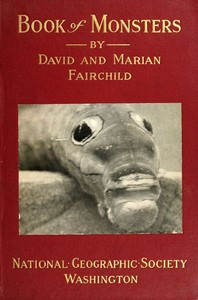
Book of Monsters: Portraits and Biographies of a Few of the Inhabitants of Woodland and Meadow
Written by David Fairchild,Marian Fairchild
Chaptra reads alongside you — AI insights, chapter breakdowns and reader discussions for every book. Join free
About this book
Read it with a club
Small groups reading the same books and talking as they go.


News
- 4 members
- 1,813 discussions
- Active Sep 11
Read Book of Monsters: Portraits and Biographies of a Few of the Inhabitants of Woodland and Meadow alongside people who are reading it too.
Also here: News Bulletin, Just Joking....
Chaptra Prime — paid clubs, every club feature, and unlimited reading support, for $5 a month or $60 once.
See PrimeReading guide
Themes, characters and key ideas in Book of Monsters: Portraits and Biographies of a Few of the Inhabitants of Woodland and Meadow, written by Chaptra AI.
- about 8 hours
- intermediate
- Educational
- Insightful
- Naturalistic
Book of Monsters: Portraits and Biographies of a Few of the Inhabitants of Woodland and Meadow, penned by David and Marian Fairchild in the early 20th century, is a pioneering scientific work exploring insects and spiders. It challenges conventional fears by presenting these creatures not merely as 'monsters' but as integral components of the ecosystem, acting as both adversaries and essential allies to human survival. The authors advocate for a deeper understanding of these often-maligned beings, particularly highlighting the ecological benefits of spiders, such as pest control. Ultimately, the book aims to transform the reader's perception, fostering appreciation for the intricate natural balance and the vital roles these small inhabitants play in our world.
“These small creatures, often deemed monsters, are in truth essential threads in the tapestry of life, weaving destruction and support into our very existence.”
Key themes
- Coexistence and Interdependence
- This is the central theme of the book, arguing that humans do not exist in isolation from nature but are intimately connected to and dependent on even the smallest creatures. The Fairchilds emphasize that the balance of the ecosystem, and by extension human survival, relies on understanding and living alongside these 'monsters,' recognizing their essential roles in the web of life.
- Human Perception vs. Biological Reality
- The book fundamentally challenges deeply ingrained human fears and prejudices against insects and spiders by presenting scientific facts that often contradict popular 'monster' narratives. It seeks to reveal the true complexity and ecological significance of these creatures, encouraging readers to move beyond superficial revulsion to a deeper, evidence-based understanding.
- Scientific Education and Appreciation
- A foundational purpose of the book is to educate the general public about natural history and ecology. By presenting scientific information in an accessible and engaging manner, the Fairchilds aim to cultivate a sense of wonder and appreciation for the natural world, arguing that understanding leads to respect and better stewardship.
Worth discussing
How have human perceptions of insects and spiders evolved since the early 20th century, and what role do scientific publications like 'Book of Monsters' play in shaping these views?
Chapter-by-chapter breakdowns, character arcs and the full thematic analysis come with a free account.
Discussions
No one has started one yet
Questions this book opens up
No discussions yet
Be the first to start a discussion about this book!
Sign up to start the discussionReviews
No reviews yet
Be the first to review this book!