
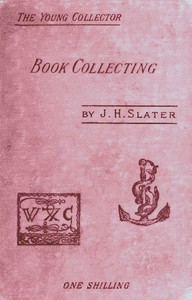
Book Collecting: A Guide for Amateurs
Written by J. Herbert (John Herbert) Slater
Chaptra reads alongside you — AI insights, chapter breakdowns and reader discussions for every book. Join free
About this book
Reading guide
Themes, characters and key ideas in Book Collecting: A Guide for Amateurs, written by Chaptra AI.
- about 10 hours
- intermediate
- informative
- instructive
- scholarly
Book Collecting: A Guide for Amateurs" by J. Herbert Slater is a seminal late 19th-century practical guide designed for nascent bibliophiles. It meticulously outlines the art and science of book collecting, beginning with a rich historical overview of books and libraries from ancient times to the advent of printing. Slater educates readers on understanding rare books, assessing their value, and navigating bibliographical terms and practices. The guide emphasizes the necessity of discernment and knowledge for successful collecting, transforming the amateur into an informed and appreciative custodian of literary heritage.
“To the true bibliophile, a book is not merely a text, but an artifact, a testament to human endeavor and artistic skill.”
Key themes
- The Pursuit of Knowledge and Scholarship in Collecting
- This theme emphasizes that true book collecting transcends mere accumulation; it is an intellectual endeavor requiring extensive knowledge of history, bibliography, printing processes, and literary context. Slater argues that a collector must be a scholar, understanding the intrinsic value, provenance, and significance of each item. This pursuit of knowledge elevates the hobby to an art form and a scholarly discipline.
- Preservation of Cultural and Historical Heritage
- The book implicitly frames book collectors as custodians of history and culture. Each collected book is not just an object but a tangible link to the past, embodying the intellectual, artistic, and technological achievements of its era. Slater's historical sweep reinforces this, showing how books have carried human thought across centuries, making the act of collecting an act of preservation.
- The Evolution and Impact of the Book
- Slater dedicates significant attention to tracing the development of the book from its earliest forms (manuscripts, scrolls) through the revolutionary invention of the printing press. This theme highlights how technological advancements profoundly shaped the creation, dissemination, and ultimately, the collectibility of books. It underscores the book as a dynamic object, continually evolving in form and function.
Worth discussing
How has the definition of "book collecting" changed since the late 19th century, particularly with the advent of digital media?
Chapter-by-chapter breakdowns, character arcs and the full thematic analysis come with a free account.
Discussions
No one has started one yet
Questions this book opens up
No discussions yet
Be the first to start a discussion about this book!
Sign up to start the discussionReviews
No reviews yet
Be the first to review this book!