
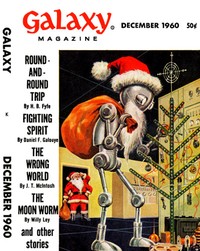
Blueblood
Written by Jim Harmon
Chaptra reads alongside you — AI insights, chapter breakdowns and reader discussions for every book. Join free
About this book
Reading guide
Themes, characters and key ideas in Blueblood, written by Chaptra AI.
- about 8 hours
- intermediate
- dark
- thought-provoking
- somber
Jim Harmon's 1960s novella, "Blueblood," presents a stark allegorical exploration of racial prejudice and societal hierarchy through the lens of science fiction. The narrative follows human space pilots Johnny, Dr. Mike Ellik, and Dr. Lee Chon, as they encounter the Azures and Indigos on a distant planet, mirroring Earth's racial divides. Driven by the belief that the Indigos' subservient status is a medical rather than inherent condition, Dr. Ellik performs a transformative surgery on an Indigo named Mhaw. However, the experiment backfires when Mhaw, now Aedo, rejects his saviors and their imposed solution, revealing the profound complexities of identity and entrenched societal roles. The story culminates in a somber reflection on the futility of external intervention in deeply rooted prejudice, leaving the characters trapped in the very cycle they sought to dismantle.
“"On this planet, the color of one's skin dictated not merely status, but destiny itself."”
Key themes
- Racial Superiority and Inferiority
- This is the core theme, directly allegorizing human racial prejudice. The novella explores how physical differences (skin color) are arbitrarily assigned social value, leading to entrenched systems of power (Azures) and subjugation (Indigos). It questions the origins of such divisions and their psychological impact on both the privileged and the oppressed.
- Identity and Self-Determination
- The theme of identity is profoundly explored through Mhaw's transformation into Aedo. The novella questions whether identity is solely tied to physical appearance, societal role, or self-perception. Aedo's rejection of both his former identity and the one imposed by the humans highlights the complexity of self-determination and the desire to define oneself on one's own terms, separate from external classifications or 'fixes.'
- Consequences of Intervention and Hubris
- The novella critically examines the hubris of well-intentioned outsiders attempting to 'fix' deeply entrenched societal problems without fully understanding their complexities. Dr. Ellik's experiment, driven by a scientific belief in a simple solution, leads to unintended and negative consequences, culminating in disillusionment rather than resolution. It's a cautionary tale about the limitations of external intervention and the potential for harm, even when intentions are good.
Worth discussing
How does "Blueblood" use the science fiction setting to critique real-world issues of racial prejudice and social hierarchy?
Chapter-by-chapter breakdowns, character arcs and the full thematic analysis come with a free account.
Discussions
No one has started one yet
Questions this book opens up
No discussions yet
Be the first to start a discussion about this book!
Sign up to start the discussionReviews
No reviews yet
Be the first to review this book!