
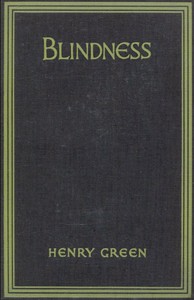
Blindness
Written by Henry Green
Chaptra reads alongside you — AI insights, chapter breakdowns and reader discussions for every book. Join free
About this book
Reading guide
Themes, characters and key ideas in Blindness, written by Chaptra AI.
- about 8 hours
- advanced
- dark
- introspective
- poignant
Henry Green's "Blindness" is a profound early 20th-century novel chronicling the life of John Haye, a young man whose world is irrevocably altered after a sudden accident leaves him blind. The narrative meticulously traces John's descent into an internal world of despair and introspection, as he grapples with the physical and psychological ramifications of his new reality. It delves into the complex dynamics of his relationship with his overbearing yet loving mother, and the evolving nature of his connections with friends and society. Through a unique literary style, Green explores themes of identity, loss, adaptation, and the profound isolation that accompanies a life-altering disability, ultimately presenting a poignant study of human resilience and the redefinition of self.
“He was blind. It was as simple as that.”
Key themes
- Loss of Sight and Perception
- This is the central theme, exploring not just the physical loss of vision but the complete reordering of John's sensory world and mental landscape. It delves into how sight defines reality, identity, and interaction, and how its absence forces a radical shift in perception, emphasizing other senses and internal experiences.
- Identity and Self-Discovery
- The novel profoundly explores how John's identity is shattered and then slowly reconstructed after his blindness. It questions what constitutes the 'self' when a fundamental aspect of one's interaction with the world is removed, forcing John to confront his inner being and redefine his purpose and existence.
- Isolation and Alienation
- John's blindness plunges him into profound isolation, not only from the physical world but also from his former friends and the sighted society. The theme explores the deep loneliness that accompanies such a radical change, the difficulty of communication across different experiences, and the feeling of being an outsider in one's own life.
Worth discussing
How does Green's unique writing style contribute to the reader's understanding and experience of John's blindness?
Chapter-by-chapter breakdowns, character arcs and the full thematic analysis come with a free account.
Discussions
No one has started one yet
Questions this book opens up
No discussions yet
Be the first to start a discussion about this book!
Sign up to start the discussionReviews
No reviews yet
Be the first to review this book!