
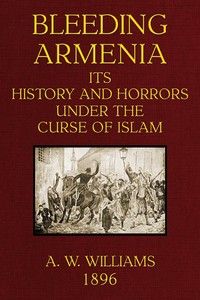
Bleeding Armenia: Its history and horrors under the curse of Islam
Written by M. Smbat Gabrielean,Augustus Warner Williams
Chaptra reads alongside you — AI insights, chapter breakdowns and reader discussions for every book. Join free
About this book
Reading guide
Themes, characters and key ideas in Bleeding Armenia: Its history and horrors under the curse of Islam, written by Chaptra AI.
- about 10 hours
- intermediate
- Grim
- Tragic
- Urgent
Bleeding Armenia: Its history and horrors under the curse of Islam is a late 19th-century historical account meticulously detailing the centuries-long suffering and persecution of the Armenian people. The book chronicles Armenia's ancient past, emphasizing its steadfast Christian faith amidst relentless invasions and brutal oppression primarily under Islamic rule. Authors Gabrielean and Williams aim to expose the atrocities faced by Armenians, portraying them as a martyr nation enduring unimaginable horrors for their identity. Beyond merely documenting history, the work serves as an impassioned plea, urging the Christian world to acknowledge and intervene in the severe plight of the Armenian population, underscoring a moral responsibility to act against these injustices.
“For centuries, the Armenian nation has bled, a testament to its unyielding faith amidst an ocean of persecution.”
Key themes
- Persecution and Suffering
- This is the central and most pervasive theme, detailing the relentless and brutal suffering endured by the Armenian people for centuries. The book vividly recounts massacres, forced displacements, religious oppression, and systematic violence, emphasizing the physical and psychological toll on the nation.
- Religious Identity and Martyrdom
- The book strongly emphasizes the Armenian people's unwavering Christian faith as a core aspect of their identity and a primary reason for their persecution. Their suffering is often framed as martyrdom, enduring atrocities for their adherence to Christianity under Islamic rule, thus appealing to a Christian readership's sense of shared faith.
- Historical Injustice and Call to Action
- The authors frame the Armenian experience as a profound historical injustice, arguing that centuries of unpunished atrocities demand international attention and intervention. The book serves as an explicit call to action, particularly directed at the Christian world, to advocate for and assist the suffering Armenian population.
Worth discussing
How does the book's late 19th-century context influence its portrayal of historical events and its 'call to action'?
Chapter-by-chapter breakdowns, character arcs and the full thematic analysis come with a free account.
Discussions
No one has started one yet
Questions this book opens up
No discussions yet
Be the first to start a discussion about this book!
Sign up to start the discussionReviews
No reviews yet
Be the first to review this book!