
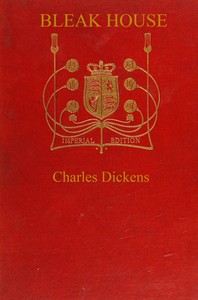
Bleak House
Written by Charles Dickens
Chaptra reads alongside you — AI insights, chapter breakdowns and reader discussions for every book. Join free
About this book
Read it with a club
Chaptra's fiction clubs — small groups reading the same books and talking as they go.


CraxMe Readers Book Club
Fiction
- 385 members
- 227 discussions
- Started December 2025
Welcome to the Readers Book Club. This is an informal group for like-minded people, where you can discuss books, share and recommend, track your reading progress, and lots more. Discuss Books — all about books. Discuss a particular book or genre, share your favourite quotes. Book Reviews — loved a book and highly recommend it? Or was it just average? Share your review and discuss with fellow readers. (May contain spoilers.) Group Reads — what is a book club without a group read! Buddy Reads — planning to read a book and looking for someone to read it with? Post in the Buddy Read request thread, find a reading buddy, and start discussing.
Read Bleak House alongside people who are reading it too.
Also here: Doorstops, First Lines Club
Chaptra Prime — paid clubs, every club feature, and unlimited reading support, for $5 a month or $60 once.
See PrimeReading guide
Themes, characters and key ideas in Bleak House, written by Chaptra AI.
- about 35 hours
- advanced
- dark
- satirical
- melancholy
Charles Dickens' "Bleak House" is a sprawling and intricate novel that masterfully interweaves two narrative voices to expose the profound injustices and inefficiencies of the Victorian legal system, epitomized by the endless Chancery suit of Jarndyce and Jarndyce. The story follows the virtuous Esther Summerson, an orphan who discovers the secrets of her parentage, and the relentless pursuit of Lady Dedlock's hidden past by the cold lawyer Mr. Tulkinghorn, ultimately leading to tragedy. Through its vast cast of characters and vivid social commentary, the novel critiques societal apathy, ineffective philanthropy, and the suffocating grip of secrecy, all set against the backdrop of London's pervasive fog and moral decay. It is a powerful indictment of a system that grinds individuals to dust while doing nothing to alleviate suffering.
“Fog everywhere. Fog up the river where it flows among green aits and meadows; fog down the river, where it rolls defiled among the tiers of shipping and black colliers. Fog on the Essex marshes, fog on the Kentish heights. Fog in the eyes and throats of ancient Greenwich pensioners, wheezing by the firesides of their wards; fog in the stem and bowl of the tobacco-pipes of Gravesend watermen; fog on the brow of the old Greenwich Pensioner, with a motley of half-pay and no-pay.”
Key themes
- The Injustice and Inefficiency of the Legal System
- The novel's central theme, embodied by the interminable Jarndyce and Jarndyce case, critiques the Chancery Court as a symbol of bureaucratic paralysis, waste, and human suffering. It highlights how the legal system, rather than serving justice, actively destroys lives and consumes resources.
- Social Hypocrisy and Inaction
- Dickens satirizes various forms of Victorian hypocrisy, particularly the ineffective and often self-serving philanthropy that ignores immediate suffering while focusing on distant causes. He exposes the gap between outward appearances of respectability and underlying moral decay or indifference.
- Secrecy, Identity, and Parentage
- The novel explores the destructive power of hidden truths, particularly concerning parentage and past indiscretions. Characters like Lady Dedlock and Esther are profoundly shaped by secrets, illustrating how undisclosed identities and suppressed histories can lead to tragedy and alienation.
Worth discussing
How does Dickens use the dual narrative structure (Esther's first-person and the omniscient third-person) to achieve different effects and convey the novel's themes?
Chapter-by-chapter breakdowns, character arcs and the full thematic analysis come with a free account.
Discussions
No one has started one yet
Questions this book opens up
No discussions yet
Be the first to start a discussion about this book!
Sign up to start the discussionReviews
No reviews yet
Be the first to review this book!