
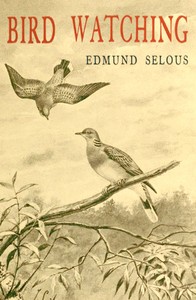
Bird Watching
Written by Edmund Selous
Chaptra reads alongside you — AI insights, chapter breakdowns and reader discussions for every book. Join free
About this book
Reading guide
Themes, characters and key ideas in Bird Watching, written by Chaptra AI.
- about 8 hours
- intermediate
- reflective
- observational
- serene
Edmund Selous's "Bird Watching" is an early 20th-century nature observation book that immerses readers in the detailed world of avian life through the author's personal experiences. Eschewing formal scientific study, Selous offers an intimate and casual exploration of various bird species, focusing on their behaviors, social dynamics, and physical attributes. The book particularly highlights his meticulous observations of birds like the great plover, vividly depicting their daily routines, interactions, and responses to their environment. Through evocative prose, Selous aims to convey both factual insights and the profound emotional connection one can forge with wildlife, inviting readers to share in the joy and wonder of birdwatching.
“"To watch birds is to enter into a world of endless fascination, where every twitch of a feather, every call, every social interaction unveils a deeper mystery."”
Key themes
- The Art of Observation and Patience
- This is the foundational theme, as Selous champions a method of deep, prolonged, and empathetic observation as the primary means of understanding nature. He argues that true insight comes not from fleeting glances or formal experiments, but from patient immersion and a willingness to simply 'be' with the subjects, allowing their natural behaviors to unfold without human interference.
- Human Connection to Nature
- Selous's writing goes beyond mere factual reporting, conveying a profound emotional and intellectual connection to the birds he observes. He shares his wonder, his moments of insight, and his sense of communion with the wild, suggesting that engaging with nature is not just an academic pursuit but a deeply enriching and essential human experience.
- The Intricacies of Wildlife Behavior and Social Dynamics
- Through his meticulous observations, Selous reveals the complex social structures, communication methods, and behavioral patterns of birds. He highlights their intelligence, adaptability, and the subtle nuances of their daily lives, challenging simplistic views of animals as purely instinct-driven and showcasing their rich inner worlds and interactions.
Worth discussing
How does Selous's approach to 'bird watching' differ from modern ornithological study, and what are the strengths and weaknesses of each?
Chapter-by-chapter breakdowns, character arcs and the full thematic analysis come with a free account.
Discussions
No one has started one yet
Questions this book opens up
No discussions yet
Be the first to start a discussion about this book!
Sign up to start the discussionReviews
No reviews yet
Be the first to review this book!