
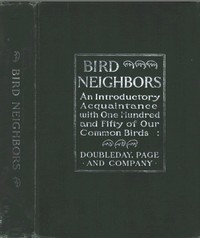
Bird Neighbors: An Introductory Acquaintance with One Hundred and Fifty Birds Commonly Found in the Gardens, Meadows, and Woods About Our Homes
Written by Neltje Blanchan
Chaptra reads alongside you — AI insights, chapter breakdowns and reader discussions for every book. Join free
About this book
Reading guide
Themes, characters and key ideas in Bird Neighbors: An Introductory Acquaintance with One Hundred and Fifty Birds Commonly Found in the Gardens, Meadows, and Woods About Our Homes, written by Chaptra AI.
- about 10 hours
- intermediate
- informative
- educational
- appreciative
Bird Neighbors by Neltje Blanchan is a pioneering early 20th-century field guide designed to introduce the layperson to 150 common North American birds. Eschewing complex scientific jargon, Blanchan categorizes birds primarily by their dominant color, making identification remarkably accessible for beginners. Through vivid descriptions of plumage, song, habitat, and behavior, the book aims to cultivate an appreciation for avian life in suburban and rural settings. It served as an important tool in the nascent bird study and conservation movements, inspiring generations to observe and protect their feathered neighbors and democratizing ornithological knowledge.
“To him who would know the birds, the first step is to learn to see them.”
Key themes
- Nature Appreciation and Observation
- The core theme is the encouragement of direct, mindful observation of nature, specifically birds, as a source of wonder, education, and spiritual enrichment. Blanchan emphasizes the accessibility of nature's beauty to anyone willing to look and listen, fostering a personal connection to the natural world.
- Accessibility of Knowledge and Popular Science
- Blanchan's innovative approach demystified ornithology, making it understandable and engaging for a non-specialist audience. She consciously broke down barriers to scientific knowledge, particularly for women and children who were often excluded from formal scientific study, thereby democratizing access to natural history.
- Early Conservation and Environmental Stewardship
- While not explicitly a conservation manifesto, the book implicitly advocates for the protection of birds by fostering a deep appreciation for them. By making birds beloved and understood, it contributes to the moral argument for their preservation, especially pertinent during the era of the 'plumage trade' and growing public concern for avian populations.
Worth discussing
How effective is Blanchan's color-based identification system compared to modern field guides that rely more on taxonomy, shape, or habitat? What are its strengths and weaknesses?
Chapter-by-chapter breakdowns, character arcs and the full thematic analysis come with a free account.
Discussions
No one has started one yet
Questions this book opens up
No discussions yet
Be the first to start a discussion about this book!
Sign up to start the discussionReviews
No reviews yet
Be the first to review this book!