
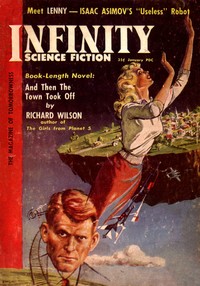
Beyond our control
Written by Randall Garrett
Chaptra reads alongside you — AI insights, chapter breakdowns and reader discussions for every book. Join free
About this book
Reading guide
Themes, characters and key ideas in Beyond our control, written by Chaptra AI.
- about 8 hours
- intermediate
- mysterious
- optimistic
- technological
Randall Garrett's "Beyond Our Control" is a late 1950s science fiction novel chronicling a global crisis triggered by the malfunction of a key communication satellite. James Fitzpatrick MacIlheny, a communications executive, leads the frantic investigation into Satellite Number Four's sudden inoperability and altered orbit. The crisis escalates upon the discovery of an extraterrestrial spacecraft responsible for the incident. The narrative culminates in a pivotal, misunderstood exchange where humanity trades an H-bomb for an alien weapon, ultimately fostering an unexpected path towards interstellar diplomacy and mutual understanding. The story concludes on an optimistic note, highlighting cooperation over conflict in the face of the unknown.
“Satellite Four... gone. Just like that. The world's communication hangs by a thread, and we don't even know why.”
Key themes
- First Contact and Interstellar Diplomacy
- This is the central thematic core, exploring the profound implications of encountering intelligent extraterrestrial life. Garrett portrays first contact not as an immediate war, but as a complex process of misunderstanding, negotiation, and eventual, if tentative, diplomacy. The exchange of an H-bomb for an alien weapon serves as a powerful symbol of this initial, fraught interaction.
- Technological Reliance and Vulnerability
- The novel critically examines humanity's increasing dependence on advanced technology, specifically global communication satellites. The initial crisis highlights how quickly society can be thrown into disarray when critical infrastructure fails, underscoring the inherent fragility of such systems and the potential for unforeseen consequences.
- Understanding and Misunderstanding
- A key element of the first contact scenario is the challenge of communication across vast cultural and biological divides. The novel highlights how initial interactions are prone to misinterpretation, yet also demonstrates the potential for common ground and mutual respect to emerge even from confusion.
Worth discussing
How does the novel's portrayal of humanity's reliance on technology resonate with today's world?
Chapter-by-chapter breakdowns, character arcs and the full thematic analysis come with a free account.
Discussions
No one has started one yet
Questions this book opens up
No discussions yet
Be the first to start a discussion about this book!
Sign up to start the discussionReviews
No reviews yet
Be the first to review this book!