
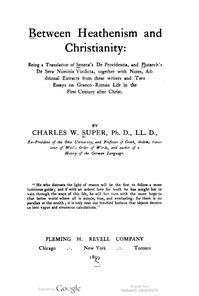
Between Heathenism and Christianity: Being a translation of Seneca's De Providentia, and Plutarch's De sera numinis vindicta, together with notes, additional extracts from these writers and two essays on Graeco-Roman life in the first century after Christ.
Written by Plutarch,Lucius Annaeus Seneca,Charles William Super
Chaptra reads alongside you — AI insights, chapter breakdowns and reader discussions for every book. Join free
About this book
Read it with a club
Chaptra's ideas and essays clubs — small groups reading the same books and talking as they go.


Books That Changed My Mind
Ideas and essays
- 5 members
- 4 discussions
- Active Sep 11
Not books you enjoyed. Books that moved you off a position you'd genuinely held for years. This is a Chaptra house club — set up and moderated by us to get the conversation going. Open to everyone; jump in anywhere.
Read Between Heathenism and Christianity: Being a translation of Seneca's De Providentia, and Plutarch's De sera numinis vindicta, together with notes, additional extracts from these writers and two essays on Graeco-Roman life in the first century after Christ. alongside people who are reading it too.
Chaptra Prime — paid clubs, every club feature, and unlimited reading support, for $5 a month or $60 once.
See PrimeReading guide
Themes, characters and key ideas in Between Heathenism and Christianity: Being a translation of Seneca's De Providentia, and Plutarch's De sera numinis vindicta, together with notes, additional extracts from these writers and two essays on Graeco-Roman life in the first century after Christ., written by Chaptra AI.
- about 12 hours
- advanced
- Philosophical
- Scholarly
- Historical
Charles W. Super's "Between Heathenism and Christianity" is a pivotal scholarly work translating Seneca’s "De Providentia" and Plutarch’s "De Sera Numinis Vindicta," offering a profound exploration of Graeco-Roman philosophical thought in the first century CE. The book positions these ancient thinkers at the intellectual crossroads preceding the rise of Christianity, examining their perspectives on providence, morality, and the human condition. Super provides extensive notes and essays that contextualize these classical texts within the broader historical and ideological shift from paganism to the nascent Christian faith. It highlights the enduring relevance of ancient wisdom while illuminating the complex challenges and questions that characterized this transformative era.
“"No evil can befall a good man; nor can opposites combine. For good cannot be corrupted by evil, nor evil by good."(attributed to Seneca's 'De Providentia')”
Key themes
- Providence and Divine Justice
- This theme is central, explored through Seneca's Stoic defense of a benevolent providence despite human suffering, and Plutarch's examination of the delay in divine retribution. Both grapple with the nature of divine intervention and its fairness.
- Moral Virtue and Resilience
- Both Seneca and Plutarch emphasize the importance of living virtuously and cultivating inner strength in the face of adversity. Seneca's Stoicism advocates for indifference to external circumstances, while Plutarch focuses on the ethical implications of actions and the pursuit of a moral life.
- The Transition from Paganism to Christianity
- This overarching theme, presented by Super, frames the entire work. It explores the intellectual and cultural landscape of the first century CE, highlighting how established Graeco-Roman philosophical thought interacted with, and sometimes anticipated or opposed, the nascent Christian faith.
Worth discussing
How do Seneca's Stoic views on providence compare with early Christian understandings of divine care and suffering?
Chapter-by-chapter breakdowns, character arcs and the full thematic analysis come with a free account.
Discussions
No one has started one yet
Questions this book opens up
No discussions yet
Be the first to start a discussion about this book!
Sign up to start the discussionReviews
No reviews yet
Be the first to review this book!