
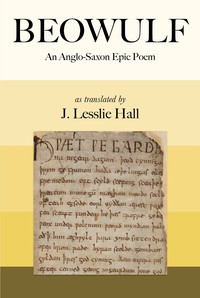
Beowulf: An Anglo-Saxon Epic Poem
Written by Unknown author
Chaptra reads alongside you — AI insights, chapter breakdowns and reader discussions for every book. Join free
About this book
Reading guide
Themes, characters and key ideas in Beowulf: An Anglo-Saxon Epic Poem, written by Chaptra AI.
- about 8 hours
- advanced
- dark
- heroic
- elegiac
Beowulf is an Old English epic poem, telling the story of a heroic Geatish warrior who travels to Denmark to defeat the monstrous Grendel, who has been terrorizing King Hrothgar's mead-hall, Heorot. After triumphing over Grendel and his vengeful mother, Beowulf returns home to Geatland, where he eventually becomes king and rules wisely for fifty years. His final act of heroism comes in old age when he faces a formidable dragon to protect his people, ultimately sacrificing his life in the battle. The poem explores themes of heroism, fate, good versus evil, and the transience of human life and glory, set against a backdrop of ancient Germanic warrior culture.
“Oft Scyld Scefing sceaþena þreatum, monegum mægþum, meodosetla ofteah, egsode eorlas. Syððan ærest wearð feasceaft funden, he þæs frofre gebad, weox under wolcnum, weorðmyndum þah, oðþæt him æghwylc ymbsittendra ofer hronrade hyran scolde, gomban gyldan. Þæt wæs god cyning!”
Key themes
- Heroism and the Heroic Code
- The poem meticulously details the Anglo-Saxon heroic code, which emphasizes courage, loyalty (comitatus), honor, the pursuit of glory (lof), and the generous distribution of wealth by a 'ring-giver' king. Beowulf himself is the epitome of this code, consistently demonstrating these virtues throughout his life, from seeking fame in youth to self-sacrifice in old age.
- Good vs. Evil
- The conflict between Beowulf and the monsters is a stark representation of the eternal struggle between good and evil. Grendel and his mother are explicitly linked to Cain, embodying a primordial, unholy evil that seeks to destroy human order and joy. Beowulf, as God's champion, represents the forces of light and order.
- Fate (Wyrd) and Free Will
- The poem grapples with the Anglo-Saxon concept of *wyrd*, or fate, which dictates human destiny. Characters often acknowledge their predetermined path, yet they also make choices that demonstrate agency. This creates a tension between accepting one's fate and striving to overcome challenges through courage and strength.
Worth discussing
How does Beowulf exemplify or challenge the Anglo-Saxon heroic code? What are the virtues and limitations of this code?
Chapter-by-chapter breakdowns, character arcs and the full thematic analysis come with a free account.
Discussions
No one has started one yet
Questions this book opens up
No discussions yet
Be the first to start a discussion about this book!
Sign up to start the discussionReviews
No reviews yet
Be the first to review this book!