
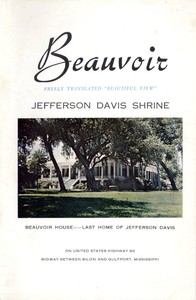
Beauvoir: Jefferson Davis Shrine
Written by United Daughters of the Confederacy. Mississippi Division
Chaptra reads alongside you — AI insights, chapter breakdowns and reader discussions for every book. Join free
About this book
Reading guide
Themes, characters and key ideas in Beauvoir: Jefferson Davis Shrine, written by Chaptra AI.
- about 8 hours
- intermediate
- reverent
- historical
- commemorative
Beauvoir: Jefferson Davis Shrine is a commemorative and historical publication by the United Daughters of the Confederacy, Mississippi Division, detailing the history of Beauvoir estate and its transformation into a sacred memorial to Jefferson Davis and the Confederate cause. The book serves as both a historical account of Davis's final years and a promotional piece for the UDC's efforts in preserving and interpreting Confederate heritage. It meticulously outlines the acquisition of the property, its development as a museum and Confederate veterans' home, and its enduring significance as a symbol of Southern identity and the Lost Cause narrative. The work aims to solidify Davis's legacy as a noble, tragic figure and Beauvoir as a hallowed ground.
“"Beauvoir stands today as a sacred trust, a testament to the enduring spirit of the South and the memory of its revered President."”
Key themes
- The Lost Cause Narrative
- This is the overarching theme, presenting the Confederacy as a noble, tragic cause fought for states' rights and Southern honor, rather than slavery. It romanticizes Confederate figures, minimizes the role of slavery, and portrays the South as a victim of Northern aggression and reconstruction.
- Memory and Commemoration
- The book explores how historical memory is constructed, preserved, and transmitted across generations. It highlights the deliberate efforts of the UDC to shape public memory of the Civil War and its figures, emphasizing the importance of physical sites and rituals in this process.
- Southern Identity and Heritage
- The book implicitly defines and reinforces a particular vision of Southern identity, one rooted in the antebellum past and the Confederate struggle. It posits a unique Southern culture and heritage that must be protected and celebrated, often in opposition to national narratives.
Worth discussing
How does 'Beauvoir: Jefferson Davis Shrine' exemplify the 'Lost Cause' narrative? What are its key characteristics?
Chapter-by-chapter breakdowns, character arcs and the full thematic analysis come with a free account.
Discussions
No one has started one yet
Questions this book opens up
No discussions yet
Be the first to start a discussion about this book!
Sign up to start the discussionReviews
No reviews yet
Be the first to review this book!