
About this book
Reading guide
Themes, characters and key ideas in Be Polite to All, written by Chaptra AI.
- about 1 hours
- beginner
- didactic
- moral
- instructive
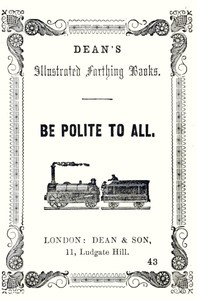
Be Polite to All" is a late 19th-century illustrated moral tale emphasizing universal civility and respect. The narrative unfolds around a rude train conductor who dismisses a seemingly unimportant, lame man based on his appearance. This disregarded individual is later revealed to be the Chairman of the Railway Company, who, instead of retaliation, uses the encounter to teach the conductor a valuable lesson. The Chairman advises him to treat everyone with kindness, regardless of their outward status, highlighting the deceptive nature of appearances. The story serves as a timeless reminder that courtesy should be extended to all, fostering a society built on mutual respect.
“Always remember, courtesy is a garment that fits all, and should be worn for all.”
Key themes
- Politeness and Civility
- This is the central tenet of the book, advocating for the universal application of courtesy and respectful behavior towards all individuals, regardless of their social standing, wealth, or physical appearance. It emphasizes that politeness is not merely a social grace but a fundamental moral obligation.
- Appearance vs. Reality
- The book critically examines the folly of judging individuals based on superficial observations, particularly their physical presentation or perceived social status. It reveals how outward appearances can be deeply misleading and often conceal true worth, authority, or character.
- Moral Instruction and Didacticism
- The very purpose of the book is to impart a moral lesson directly to the reader. It functions as a didactic tale, clearly illustrating a principle of ethical conduct through a narrative example, characteristic of much late 19th-century children's and moral literature.
Worth discussing
How does the story challenge the idea of social hierarchy and superficial judgment in its late 19th-century context?
Chapter-by-chapter breakdowns, character arcs and the full thematic analysis come with a free account.
Discussions
No one has started one yet
Questions this book opens up
No discussions yet
Be the first to start a discussion about this book!
Sign up to start the discussionReviews
No reviews yet
Be the first to review this book!