
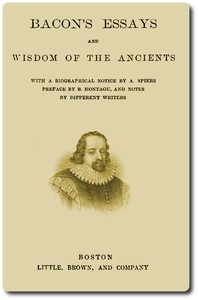
Bacon's Essays, and Wisdom of the Ancients
Written by Francis Bacon
Chaptra reads alongside you — AI insights, chapter breakdowns and reader discussions for every book. Join free
About this book
Reading guide
Themes, characters and key ideas in Bacon's Essays, and Wisdom of the Ancients, written by Chaptra AI.
- about 25 hours
- advanced
- philosophical
- reflective
- instructive
Bacon's Essays, and Wisdom of the Ancients is a seminal philosophical work from the early 17th century, compiling Francis Bacon's renowned moral and civil essays alongside his insightful interpretations of classical myths. Characterized by a concise, aphoristic style, the essays offer practical wisdom rooted in empirical observation and reflection on human nature, power, and ethics. The "Wisdom of the Ancients" section reinterprets ancient fables as allegories for human behavior and societal principles, blending classical thought with Baconian philosophy. This collection serves as a foundational text in Western thought, bridging Renaissance humanism with the emerging scientific method, encouraging profound self-reflection and a pragmatic approach to life and governance.
“A mixture of a lie doth ever add pleasure.”
Key themes
- The Nature of Truth and Knowledge
- Bacon consistently explores the pursuit and apprehension of truth, often contrasting it with opinion, falsehood, and self-deception. He advocates for an empirical approach to knowledge, emphasizing observation and experience over dogma or pure speculation. He also examines how human biases (Idols, though more fully developed in *Novum Organum*) impede the acquisition of genuine understanding. The importance of "Studies" in shaping the mind is also central to this theme.
- Human Nature and Morality
- Bacon dissects various aspects of human behavior, virtues, and vices with a keen, often detached, psychological insight. He examines passions like revenge, envy, ambition, and friendship, often presenting a realistic, sometimes cynical, view of human motivations. His essays are essentially moral treatises, offering practical advice on how to navigate life's complexities and cultivate a virtuous character, though always with an eye towards effectiveness and utility.
- Power, Politics, and Governance
- Many of Bacon's essays delve into the practicalities of governance, the nature of leadership, the acquisition and maintenance of power, and the stability of states. He offers advice to princes and statesmen on topics ranging from managing factions and handling sedition to conducting war and maintaining a balanced economy. His approach is pragmatic, focusing on what works in the realpolitik of statecraft, rather than purely idealistic principles.
Worth discussing
How does Bacon's emphasis on practical wisdom and empirical observation manifest in his essays, and how does this contrast with earlier philosophical traditions?
Chapter-by-chapter breakdowns, character arcs and the full thematic analysis come with a free account.
Discussions
No one has started one yet
Questions this book opens up
No discussions yet
Be the first to start a discussion about this book!
Sign up to start the discussionReviews
No reviews yet
Be the first to review this book!