
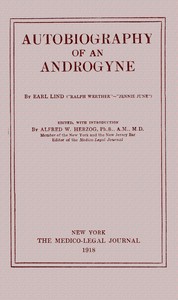
Autobiography of an Androgyne
Written by Ralph Werther
Chaptra reads alongside you — AI insights, chapter breakdowns and reader discussions for every book. Join free
About this book
Reading guide
Themes, characters and key ideas in Autobiography of an Androgyne, written by Chaptra AI.
- about 10 hours
- advanced
- confessional
- analytical
- somber
Ralph Werther's "Autobiography of an Androgyne," published in 1918, is a groundbreaking, raw, and deeply personal account of Jennie June (also known as Earl Lind), an individual who identifies as an androgyne living in early 20th-century New York City. The book chronicles June's life from childhood, marked by an inherent sense of gender non-conformity, through their experiences with same-sex desire, cross-dressing, and engagement in sex work, particularly within the nascent queer subcultures of the era. It offers an unparalleled first-person perspective on navigating a gender identity and sexuality that defied societal norms, providing a crucial historical document for understanding early conceptualizations of transgressive identities and the lives of those who embodied them. June's narrative is a plea for understanding and a defiant assertion of their existence, challenging the rigid binary understandings of gender and sexuality prevalent at the time.
“"I have always felt myself to be a mental hermaphrodite, a spiritual androgyne."”
Key themes
- Gender Identity and Expression
- This is the core theme of the book, explored through June's consistent identification as an 'androgyne' or 'psychic hermaphrodite,' a person with a male body but a feminine mind and soul. The theme delves into the internal experience of gender variance, the desire to cross-dress, and the profound disconnect June feels with the gender assigned at birth. It highlights the early 20th-century struggle to articulate and live out a non-binary gender identity before modern terminology existed, showcasing both June's innate sense of self and their attempts to fit it into contemporary medical frameworks.
- Sexuality and Desire
- The book extensively explores same-sex desire and the complexities of sexuality for a gender non-conforming individual. June recounts their early same-sex attractions, their experiences with male lovers, and their engagement in prostitution within the homosexual subculture. This theme examines how June's sexual orientation is intertwined with their gender identity, and how both are viewed and pathologized by society. It also sheds light on the clandestine nature of same-sex relationships and the formation of queer sexual communities in a hostile environment.
- Societal Ostracization and the Search for Belonging
- June's narrative is permeated by the pervasive experience of being an outcast. From childhood, June faces misunderstanding, ridicule, and rejection from family and mainstream society due to their gender non-conformity and sexuality. This theme explores the psychological toll of such ostracization, the constant struggle for acceptance, and the subsequent search for community among others who share similar experiences. It highlights the desperation and resilience required to survive on the margins of society.
Worth discussing
How does Jennie June's self-identification as an 'androgyne' or 'psychic hermaphrodite' compare to modern understandings of gender identity (e.g., transgender, non-binary)? What are the similarities and differences?
Chapter-by-chapter breakdowns, character arcs and the full thematic analysis come with a free account.
Discussions
No one has started one yet
Questions this book opens up
No discussions yet
Be the first to start a discussion about this book!
Sign up to start the discussionReviews
No reviews yet
Be the first to review this book!