
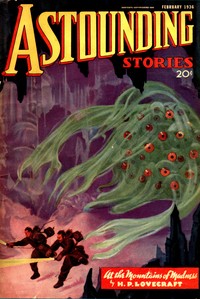
At the mountains of madness
Written by H. P. (Howard Phillips) Lovecraft
Chaptra reads alongside you — AI insights, chapter breakdowns and reader discussions for every book. Join free
About this book
Reading guide
Themes, characters and key ideas in At the mountains of madness, written by Chaptra AI.
- about 8 hours
- advanced
- dark
- mysterious
- foreboding
H. P. Lovecraft's "At the Mountains of Madness" chronicles a Miskatonic University expedition to Antarctica that uncovers the ruins of an ancient, non-human civilization known as the Elder Things. Narrated by geologist William Dyer, the story details the discovery of bizarre fossilized creatures and cyclopean architecture, which gradually reveal a terrifying history of Earth's pre-human past and the Elder Things' interactions with even more monstrous entities. As the expedition delves deeper into the frozen continent, the scientists confront horrifying truths that challenge human sanity and the very fabric of reality, culminating in a desperate retreat and a dire warning against further exploration. The novella masterfully blends scientific discovery with cosmic horror, exploring themes of forbidden knowledge, the insignificance of humanity, and the psychological impact of confronting alien antiquity.
“The most merciful thing in the world, I think, is the inability of the human mind to correlate all its contents.”
Key themes
- Cosmic Horror and the Insignificance of Humanity
- This is the foundational theme of Lovecraft's work. The story emphasizes humanity's utter insignificance in the face of ancient, alien entities and the vast, indifferent cosmos. The Elder Things, with their billions of years of history, and the even older horrors they faced, dwarf human civilization and achievements, revealing a universe where humanity is a mere accident, easily erased or ignored.
- Forbidden Knowledge and Its Perils
- The narrative is a cautionary tale about the dangers of seeking knowledge that is beyond human comprehension or that challenges the very foundations of sanity. The expedition's pursuit of scientific discovery leads them to truths that are not merely dangerous, but utterly destructive to the human psyche.
- Evolution and Deep Time
- Lovecraft uses the Elder Things to explore concepts of evolution and geological time on an cosmic scale, far beyond human understanding. The Elder Things' own evolution, their genetic engineering of shoggoths, and their long history of dominance and decline illustrate a universe where life takes bizarre, non-human forms and operates on timescales that make human history seem instantaneous. This challenges anthropocentric views of evolution.
Worth discussing
How does Lovecraft build a sense of cosmic horror, and how does it differ from other forms of horror?
Chapter-by-chapter breakdowns, character arcs and the full thematic analysis come with a free account.
Discussions
No one has started one yet
Questions this book opens up
No discussions yet
Be the first to start a discussion about this book!
Sign up to start the discussionReviews
No reviews yet
Be the first to review this book!