
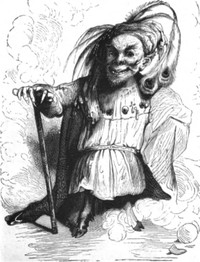
Asmodeus; or, The Devil on Two Sticks
Written by Alain René Le Sage
Chaptra reads alongside you — AI insights, chapter breakdowns and reader discussions for every book. Join free
About this book
Reading guide
Themes, characters and key ideas in Asmodeus; or, The Devil on Two Sticks, written by Chaptra AI.
- about 10 hours
- intermediate
- satirical
- humorous
- observational
Alain René Le Sage's "Asmodeus; or, The Devil on Two Sticks" is an early 18th-century satirical novel that follows Don Cleophas Leandro Perez Zambullo, a student who, while fleeing assassins, frees the demon Asmodeus from a phial. Asmodeus, known as 'The Devil on Two Sticks,' grants Don Cleophas the power to observe the hidden lives of Madrid's inhabitants by lifting the roofs from their houses. Through these supernatural insights, the novel offers a biting, humorous, and often cynical critique of human nature, societal hypocrisy, and various vices. It's an episodic journey that exposes the true motivations behind love, ambition, wealth, and morality, serving as a timeless commentary on the human condition.
“"I am Asmodeus, surnamed the Devil on Two Sticks. I am a demon of the night, whose business it is to unroof houses, that I may discover what passes within them."”
Key themes
- Social Satire and Critique
- The central theme of the novel, focusing on a biting and comprehensive critique of 18th-century Spanish society (and by extension, human society generally). Le Sage targets various institutions and social classes, exposing their hypocrisies, vanities, and moral failings.
- Appearance vs. Reality
- This theme is intrinsically linked to the novel's premise. Asmodeus's power is to reveal what truly lies beneath the surface – the hidden motivations, secret vices, and true characters that people conceal behind their public facades. It explores the deceit inherent in human interaction.
- Human Folly and Vice
- The novel systematically catalogues a wide range of human failings, from petty jealousies and vanities to serious crimes and moral corruption. It suggests that folly and vice are inherent aspects of human nature, pervasive across all social strata.
Worth discussing
How does Le Sage use the supernatural element (Asmodeus) to achieve his satirical aims? Could the same critique be made without it?
Chapter-by-chapter breakdowns, character arcs and the full thematic analysis come with a free account.
Discussions
No one has started one yet
Questions this book opens up
No discussions yet
Be the first to start a discussion about this book!
Sign up to start the discussionReviews
No reviews yet
Be the first to review this book!