
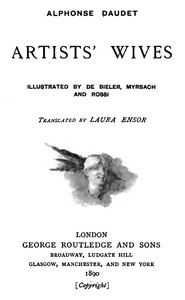
Artists' Wives
Written by Alphonse Daudet
Chaptra reads alongside you — AI insights, chapter breakdowns and reader discussions for every book. Join free
About this book
Reading guide
Themes, characters and key ideas in Artists' Wives, written by Chaptra AI.
- about 8 hours
- intermediate
- melancholic
- reflective
- realistic
Alphonse Daudet's "Artists' Wives" is a poignant collection of vignettes that delves into the intricate and often tumultuous relationship between artistic creation and marital life. Framed by an initial debate between a cynical painter and a romantic poet, the book explores how marriage can either hinder or foster an artist's genius, examining the unique challenges faced by creative individuals and their spouses. Through a series of diverse stories, Daudet reveals the misunderstandings, sacrifices, and divergent aspirations that shape these unions, ultimately offering a nuanced and often melancholic perspective on the human heart caught between passion for art and the demands of domesticity. The work serves as a subtle social commentary on late 19th-century societal expectations and the often-unseen struggles of artists' companions.
“"Marriage, my dear fellow, is the tomb of talent, the domestic grave where genius goes to sleep with a snore."”
Key themes
- Art vs. Domesticity
- This is the central, overarching theme of the collection, exploring the inherent tension and often perceived incompatibility between the demanding, solitary, and often unconventional life of an artist and the societal expectations of marriage and domestic harmony. The book questions whether one can truly flourish while simultaneously committing to the other.
- Sacrifice and Compromise
- The theme examines the sacrifices made by both artists and their wives within these unions. Artists may sacrifice financial stability, social acceptance, or even aspects of their creative freedom, while wives often sacrifice their own aspirations, personal identities, and desires for conventional happiness in service of their husband's genius.
- Gender Roles and Societal Expectations
- Daudet explores the rigid gender roles prevalent in late 19th-century French society and how they impact artistic marriages. Wives are often expected to be domestic managers, emotional supports, and silent admirers, while artists are expected to be providers, even if their art makes that difficult, and are often given more leeway for eccentric behavior.
Worth discussing
Is marriage truly detrimental or beneficial to artistic creation, as debated by Henri and Paul? How do different vignettes support or refute their arguments?
Chapter-by-chapter breakdowns, character arcs and the full thematic analysis come with a free account.
Discussions
No one has started one yet
Questions this book opens up
No discussions yet
Be the first to start a discussion about this book!
Sign up to start the discussionReviews
No reviews yet
Be the first to review this book!