
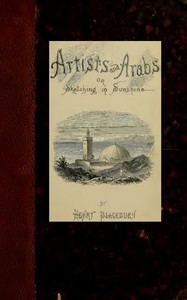
Artists and Arabs; Or, Sketching in Sunshine
Written by Henry Blackburn
Chaptra reads alongside you — AI insights, chapter breakdowns and reader discussions for every book. Join free
About this book
Reading guide
Themes, characters and key ideas in Artists and Arabs; Or, Sketching in Sunshine, written by Chaptra AI.
- about 8 hours
- intermediate
- Adventurous
- Descriptive
- Exotic
Henry Blackburn's "Artists and Arabs; Or, Sketching in Sunshine" is a captivating late 19th-century travelogue chronicling the journey of a group of London-based artists to North Africa, specifically Algeria, in pursuit of artistic inspiration. The narrative opens with the artists debating their winter destination, ultimately choosing Algeria and embarking on an adventurous expedition across European landscapes like the Val d'Aosta and Lago Maggiore. Blackburn vividly describes their travels, capturing the anticipation and beauty of the sunlit regions they traverse before their eventual arrival in the vibrant, 'exotic' city of Algiers. The book serves as an atmospheric introduction to the interplay of art, culture, and stunning landscapes, offering a European perspective on the North African world through the lens of a sketching artist.
“The pale London light had grown too familiar; our palettes yearned for the fierce, unadulterated sunshine of southern climes, a canvas untainted by the fog of convention.”
Key themes
- Artistic Inspiration and Representation
- Central to the book, this theme explores how travel, new environments, and unfamiliar cultures stimulate artistic creativity. The artists' journey is explicitly driven by a desire for fresh subjects, unique light, and exotic forms to sketch. It delves into the process of translating observed reality into artistic expression, highlighting the challenges and rewards of capturing the essence of a place through art.
- The Allure of the Exotic / Orientalism
- This theme examines the European fascination with North Africa, often viewed as 'exotic' and 'other.' The book, through its title and descriptions, embodies the 19th-century phenomenon of Orientalism, where non-Western cultures were often romanticized, stereotyped, and aestheticized for European consumption. It explores the appeal of the unfamiliar, the picturesque, and the 'primitive' as sources of artistic and intellectual curiosity.
- Cultural Encounter and Observation
- As a travelogue, the book inherently deals with the encounter between different cultures. It focuses on the artists' observations of Algerian customs, daily life, architecture, and social interactions from a European perspective. This theme explores the challenges and nuances of understanding and representing a culture that is distinct from one's own, often highlighting surface-level observations rather than deep immersion.
Worth discussing
How does Blackburn's portrayal of Algeria and its people reflect the prevailing European attitudes and artistic trends of the late 19th century?
Chapter-by-chapter breakdowns, character arcs and the full thematic analysis come with a free account.
Discussions
No one has started one yet
Questions this book opens up
No discussions yet
Be the first to start a discussion about this book!
Sign up to start the discussionReviews
No reviews yet
Be the first to review this book!