
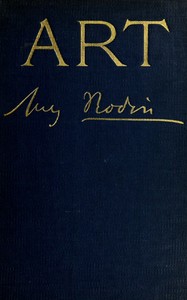
Art
Written by Auguste Rodin
Chaptra reads alongside you — AI insights, chapter breakdowns and reader discussions for every book. Join free
About this book
Reading guide
Themes, characters and key ideas in Art, written by Chaptra AI.
- about 8 hours
- advanced
- contemplative
- philosophical
- passionate
Auguste Rodin's "Art" is a profound philosophical treatise presented as a dialogue, primarily between the sculptor himself and his friend Paul Gsell. Written in the early 20th century, the book serves as Rodin's personal manifesto, passionately articulating his beliefs on the essence of artistic creation and its vital role in human experience. Rodin laments contemporary society's increasing materialism and its detachment from beauty and contemplative pursuits, arguing that true art stems from a deep appreciation of nature, inner truth, and authentic expression. Through his musings, he invites readers to reconsider the transcendent power of art beyond mere utility, emphasizing its spiritual and emotional significance.
“True art is born from a deep appreciation of nature and the human experience.”
Key themes
- The Nature of Art and Beauty
- This is the central theme, exploring Rodin's definition of art as a spiritual endeavor rooted in truth, nature, and profound expression, rather than mere imitation or material pursuit. He argues that true beauty lies in the sincere expression of inner life and the vitality found in nature, rejecting superficial aesthetics.
- The Artist's Role and Creative Process
- Rodin delineates the responsibilities and methods of the true artist. He emphasizes the need for diligent observation, profound sincerity, and an unwavering commitment to expressing the 'inner truth' of subjects. The artist is portrayed as a conduit for universal truths, a diligent student of nature, and a craftsman who must master technique to serve expression, not dominate it.
- The Power of Expression and Emotion
- Rodin champions expression and emotion as the very lifeblood of art. He believes that art's purpose is not merely to represent but to convey feeling, thought, and the 'soul' of its subject, thereby evoking a deep emotional response in the viewer. This emphasis on expressive power is foundational to his sculptural legacy.
Worth discussing
How does Rodin's critique of modern society's materialism resonate with contemporary issues regarding the value of art?
Chapter-by-chapter breakdowns, character arcs and the full thematic analysis come with a free account.
Discussions
No one has started one yet
Questions this book opens up
No discussions yet
Be the first to start a discussion about this book!
Sign up to start the discussionReviews
No reviews yet
Be the first to review this book!