
Chaptra
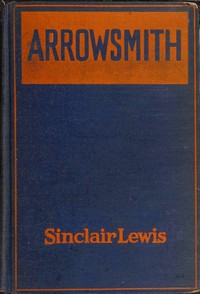
Cover of Arrowsmith

Arrowsmith

Written by Sinclair Lewis

Not rated yet — tap a star to review it

Chaptra reads alongside you — AI insights, chapter breakdowns and reader discussions for every book. Join free

About this book

"Arrowsmith" by Sinclair Lewis is a novel written in the early 20th century. The story follows Martin Arrowsmith, a young man with a passion for science and medicine, as he navigates the challenges of becoming a physician in a world that often prioritizes commercial success over genuine healing. The plot begins with Martin's formative experiences, from his childhood in a small town to his education at the University of Winnemac, providing a foundation for his character and intellect. The opening of the novel introduces Martin's lineage, starting with a ragged girl named Emmy in the Ohio wilderness, who becomes the great-grandmother of Martin Arrowsmith. We witness Martin's early fascination with medicine as he assists Doc Vickerson, the local physician, in an unsanitary and chaotic office. As he grows, Martin's ambitions to become a great doctor are shaped by both his experiences and the influences of those around him, including the eccentric Doc Vickerson and the brilliant Professor Max Gottlieb. The narrative sets the stage for Martin's internal struggles with the medical profession’s dichotomy of personal ambition versus the ethical responsibilities of healing, preparing readers for a deep exploration of idealism and reality in the medical field.

Reading guide

Themes, characters and key ideas in Arrowsmith, written by Chaptra AI.

  • about 8 hours
  • intermediate
  • Idealistic
  • Disillusioned
  • Satirical

Sinclair Lewis's "Arrowsmith" chronicles the arduous journey of Martin Arrowsmith, a gifted but conflicted young man, as he navigates the complex and often corrupt world of medicine and scientific research in early 20th-century America. Driven by an intense idealism instilled by his mentor, Professor Max Gottlieb, Martin struggles to maintain his scientific integrity against the relentless pressures of commercialism, public acclaim, and institutional politics. The novel follows his evolution from a small-town doctor to a renowned researcher, exposing the inherent conflicts between genuine healing and the pursuit of fame or profit. Ultimately, Arrowsmith's quest for pure science leads him to reject societal compromises, highlighting Lewis's critique of American materialism and the challenges faced by those who prioritize truth over expedience.

To be a scientist, you must have the faith of a saint, the patience of a donkey, and the obstinacy of a devil.

Key themes

Idealism vs. Pragmatism
This is the central conflict of the novel, explored through Martin's continuous struggle to maintain his scientific ideals in a world that constantly demands compromise, commercialization, and practical (often superficial) results. He grapples with the tension between pursuing pure, unadulterated research and the pressures to achieve fame, wealth, or immediate cures.
The Nature of Scientific Inquiry and Medical Ethics
The novel meticulously examines what constitutes true scientific rigor and the ethical responsibilities of those in medicine. Through Professor Gottlieb, Lewis advocates for an uncompromising, methodical approach to research, valuing truth and reproducibility above all else. This is contrasted with the various forms of charlatanism, careerism, and superficiality prevalent in the medical world.
American Materialism and Conformity
As with many of Lewis's novels, "Arrowsmith" serves as a trenchant critique of American society's pervasive materialism, its emphasis on outward success, and the pressure to conform. Martin's journey is a battle against these forces, which seek to divert him from his true calling towards more socially acceptable (and lucrative) paths.

Worth discussing

How does Martin Arrowsmith's idealism evolve (or devolve) throughout the novel? Is his final retreat a triumph or a surrender?

Chapter-by-chapter breakdowns, character arcs and the full thematic analysis come with a free account.

Discussions

No one has started one yet

Join

Questions this book opens up

No discussions yet

Be the first to start a discussion about this book!

Sign up to start the discussion

Reviews

No reviews yet

Be the first to review this book!