
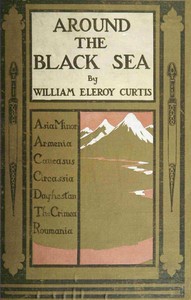
Around the Black Sea: Asia Minor, Armenia, Caucasus, Circassia, Daghestan, the Crimea, Roumania
Written by William Eleroy Curtis
Chaptra reads alongside you — AI insights, chapter breakdowns and reader discussions for every book. Join free
About this book
Reading guide
Themes, characters and key ideas in Around the Black Sea: Asia Minor, Armenia, Caucasus, Circassia, Daghestan, the Crimea, Roumania, written by Chaptra AI.
- about 12 hours
- intermediate
- observational
- informative
- historical
William Eleroy Curtis's "Around the Black Sea" is an illuminating early 20th-century travel narrative, originally penned as newspaper letters, that chronicles the author's extensive journey through the diverse lands bordering the Black Sea. The book offers a meticulous exploration of Asia Minor, Armenia, the Caucasus, Crimea, and Roumania, delving into their rich cultural tapestries, complex historical legacies, and prevailing social dynamics. Curtis's keen observations capture the everyday lives, customs, and interactions of the various peoples he encounters, from Turkish soldiers to Armenian merchants, creating a vibrant portrait of a multicultural region. Beginning with a vivid account of his Black Sea cruise, the narrative invites readers into a world of distinct traditions, natural beauty, and profound historical significance, reflecting on the geopolitical realities and human experiences of an often-overlooked corner of the world.
“"The Black Sea itself is a mirror reflecting centuries of human endeavor, commerce, and conflict, its shores a tapestry woven from diverse threads of civilization."”
Key themes
- Cultural Diversity and Coexistence
- The book vividly portrays the Black Sea region as a melting pot of numerous ethnic and religious groups—Turks, Armenians, Circassians, Greeks, Russians, Romanians, and others. Curtis meticulously observes their distinct customs, languages, religions, and social structures, highlighting both their unique identities and their often-complex interactions within shared spaces. This theme explores how these diverse populations managed to coexist, sometimes harmoniously, sometimes with underlying tensions, reflecting the region's long history as a crossroads of civilizations.
- Historical Significance and Legacy
- Curtis consistently connects his contemporary observations to the deep historical layers of the Black Sea region. He explores how ancient empires, migrations, conquests, and religious shifts have shaped the present-day landscapes, cultures, and political realities. The book emphasizes that the current conditions of the peoples and places are inextricable from their long and often tumultuous past, making history an active force in the present.
- The Nature of Travel and Exploration
- As a travel narrative, the book inherently explores the act of journeying itself—the challenges, discoveries, and transformative potential of encountering unfamiliar lands and peoples. Curtis's role as an outsider observer highlights the process of cultural interpretation and the limitations and insights gained through travel. The theme also touches upon the motivations for exploration, whether for knowledge, commerce, or diplomacy.
Worth discussing
How does Curtis's journalistic background influence his portrayal of the Black Sea region, and what are the strengths and weaknesses of this approach?
Chapter-by-chapter breakdowns, character arcs and the full thematic analysis come with a free account.
Discussions
No one has started one yet
Questions this book opens up
No discussions yet
Be the first to start a discussion about this book!
Sign up to start the discussionReviews
No reviews yet
Be the first to review this book!