
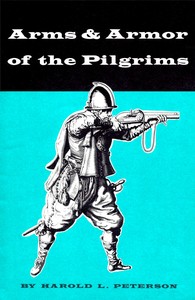
Arms and Armor of the Pilgrims, 1620-1692
Written by Harold L. (Harold Leslie) Peterson
Chaptra reads alongside you — AI insights, chapter breakdowns and reader discussions for every book. Join free
About this book
Reading guide
Themes, characters and key ideas in Arms and Armor of the Pilgrims, 1620-1692, written by Chaptra AI.
- about 12 hours
- advanced
- informative
- analytical
- detailed
Harold L. Peterson's "Arms and Armor of the Pilgrims, 1620-1692" is a meticulously researched historical account detailing the weaponry and defensive gear utilized by early American settlers. The book systematically categorizes and describes various types of firearms, edged weapons, and armor, tracing their evolution and practical application in the challenging colonial environment. Peterson highlights the Pilgrims' reliance on these tools for both defense and subsistence, illustrating their adaptations to new world conditions, such as the shift from cumbersome European armor to more practical equipment, and the transition from matchlock to flintlock firearms. It offers a vivid picture of the material culture of early colonial military life and the pragmatism required for survival in the 17th century.
“The Pilgrims' initial arsenal reflected contemporary European military standards, yet quickly proved ill-suited for the rugged demands of the New World wilderness.”
Key themes
- Technological Adaptation and Innovation
- This theme explores how the Pilgrims were forced to adapt their European military equipment to the unique challenges of the North American wilderness. It details the process of discarding impractical items (like heavy armor) and adopting or developing more suitable technologies (like the flintlock musket) to meet the demands of survival, defense, and sustenance in a new environment.
- Survival and Necessity
- This theme underscores the fundamental role of arms and armor not just for military defense against perceived threats, but also as essential tools for daily survival. It highlights how the Pilgrims' very existence depended on their ability to acquire food through hunting and protect their settlements, making their weaponry indispensable for their precarious colonial enterprise.
- Material Culture as Historical Evidence
- Peterson's work implicitly argues for the profound insights that can be gleaned from studying the physical objects of a historical period. By meticulously detailing the arms and armor, the book demonstrates how these tangible artifacts provide concrete evidence of daily life, technological capabilities, economic realities, and strategic thinking of the Pilgrims, offering a window into their world that often goes beyond written accounts.
Worth discussing
How did the specific characteristics of the North American environment necessitate the adaptation or abandonment of traditional European military equipment by the Pilgrims?
Chapter-by-chapter breakdowns, character arcs and the full thematic analysis come with a free account.
Discussions
No one has started one yet
Questions this book opens up
No discussions yet
Be the first to start a discussion about this book!
Sign up to start the discussionReviews
No reviews yet
Be the first to review this book!