
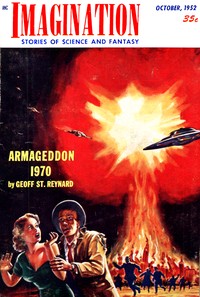
Armageddon, 1970
Written by Robert W. Krepps
Chaptra reads alongside you — AI insights, chapter breakdowns and reader discussions for every book. Join free
About this book
Read it with a club
Chaptra's fiction clubs — small groups reading the same books and talking as they go.


CraxMe Readers Book Club
Fiction
- 385 members
- 227 discussions
- Started December 2025
Welcome to the Readers Book Club. This is an informal group for like-minded people, where you can discuss books, share and recommend, track your reading progress, and lots more. Discuss Books — all about books. Discuss a particular book or genre, share your favourite quotes. Book Reviews — loved a book and highly recommend it? Or was it just average? Share your review and discuss with fellow readers. (May contain spoilers.) Group Reads — what is a book club without a group read! Buddy Reads — planning to read a book and looking for someone to read it with? Post in the Buddy Read request thread, find a reading buddy, and start discussing.
Read Armageddon, 1970 alongside people who are reading it too.
Also here: Doorstops, First Lines Club
Chaptra Prime — paid clubs, every club feature, and unlimited reading support, for $5 a month or $60 once.
See PrimeReading guide
Themes, characters and key ideas in Armageddon, 1970, written by Chaptra AI.
- about 8 hours
- intermediate
- mysterious
- suspenseful
- paranoid
Robert W. Krepps's "Armageddon, 1970" plunges Dr. Alan Rackham, a scientist at the secretive Project Star, into a labyrinth of conspiracy and extraterrestrial threats. After surviving a chilling assassination attempt and witnessing a horrific accident, Rackham, aided by his companion Brave, uncovers a series of unsettling events surrounding his work on flying disks. The narrative quickly escalates from personal danger to a larger existential threat, suggesting the presence of mutants and alien forces manipulating events from within. Rackham must navigate a world of deception and advanced technology to uncover the truth behind his mission and the true nature of the dangers lurking at Project Star, challenging his perceptions of reality and trust.
“"The future, Alan, is not built, but discovered, often to our horror."”
Key themes
- Conspiracy and Paranoia
- At the heart of "Armageddon, 1970" is a deep-seated theme of conspiracy, driving the plot and Rackham's psychological state. The narrative deliberately fosters an atmosphere of paranoia, where no one can be trusted, and hidden agendas permeate even the most secure institutions. This reflects post-WWII and early Cold War fears of infiltration and hidden enemies.
- The Nature of Humanity and Otherness
- With the introduction of 'mutants' and 'alien forces,' the novel delves into profound questions about what it means to be human and the fear of the 'other.' These entities challenge Rackham's (and the reader's) understanding of identity, belonging, and the boundaries of life. The threat is not just external but internal, as these 'others' may be indistinguishable from humans, reflecting anxieties about identity and infiltration.
- Truth vs. Deception
- Rackham's entire journey is a quest for truth amidst a pervasive atmosphere of deception. The narrative constantly challenges the protagonist to discern reality from illusion, to uncover what is truly happening behind the veil of secrecy at Project Star. This theme highlights the psychological toll of living in a world where truth is deliberately obscured and survival depends on piercing through the lies.
Worth discussing
How does the novel reflect the anxieties of the early 1950s, particularly concerning the Cold War and the fear of the unknown?
Chapter-by-chapter breakdowns, character arcs and the full thematic analysis come with a free account.
Discussions
No one has started one yet
Questions this book opens up
No discussions yet
Be the first to start a discussion about this book!
Sign up to start the discussionReviews
No reviews yet
Be the first to review this book!