
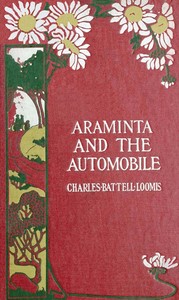
Araminta and the Automobile
Written by Charles Battell Loomis
Chaptra reads alongside you — AI insights, chapter breakdowns and reader discussions for every book. Join free
About this book
Reading guide
Themes, characters and key ideas in Araminta and the Automobile, written by Chaptra AI.
- about 4 hours
- beginner
- humorous
- lighthearted
- romantic
Charles Battell Loomis's "Araminta and the Automobile" is a delightful early 20th-century comedic novella chronicling the misadventures of a young couple, the narrator and his charming wife Araminta, as they embrace the nascent world of automobiles. Eager for adventure, their initial foray into motoring quickly devolves into a series of humorous mishaps, including collisions with local property and figures. The book cleverly satirizes societal skepticism towards new technology and the often-chaotic nature of progress, all while weaving in themes of love and domestic life. Through witty prose and relatable characters, Loomis captures the excitement, unpredictability, and inherent absurdity of early automobile culture, making for a lighthearted and engaging read.
“"Our automobile, a magnificent beast of chrome and brass, promised adventure, though it delivered rather more in the way of unexpected collisions."”
Key themes
- Technology vs. Tradition
- This is the central theme, exploring the friction and humor that arise when a revolutionary new technology, the automobile, is introduced into a community accustomed to older ways of life and transport. The car represents modernity and progress, clashing with established norms, traditional modes of transportation (horse-drawn buggies), and even physical structures (a neighbor's piazza), leading to both skepticism and comedic disruption.
- The Absurdity of Progress
- The book humorously highlights that technological 'progress' is often anything but smooth or rational in its implementation. High hopes for efficiency and adventure quickly devolve into farcical mishaps and unexpected complications, suggesting that human attempts to control or master new innovations can often lead to profoundly absurd situations. It critiques the idea of inevitable, seamless advancement.
- Love and Domestic Partnership
- Amidst the mechanical chaos and societal upheaval caused by the automobile, the enduring love, charming interactions, and shared experiences of the narrator and Araminta provide a warm, anchoring counterpoint. Their relationship underscores the human element in the face of technological change, suggesting that shared humor and mutual support are essential for navigating life's challenges, both modern and traditional. Their bond is a source of joy and stability.
Worth discussing
How does Loomis use humor to address the anxieties and excitement surrounding new technologies like the automobile?
Chapter-by-chapter breakdowns, character arcs and the full thematic analysis come with a free account.
Discussions
No one has started one yet
Questions this book opens up
No discussions yet
Be the first to start a discussion about this book!
Sign up to start the discussionReviews
No reviews yet
Be the first to review this book!