
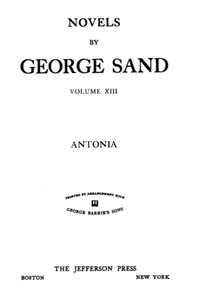
Antonia
Written by George Sand
Chaptra reads alongside you — AI insights, chapter breakdowns and reader discussions for every book. Join free
About this book
Reading guide
Themes, characters and key ideas in Antonia, written by Chaptra AI.
- about 8 hours
- intermediate
- romantic
- melancholy
- social commentary
George Sand's "Antonia" is an early 19th-century novel set in 1785 Paris, exploring the intertwined lives of a young flower painter, Julien Thierry, and the aristocratic Comtesse d'Estrelle. Following the death of Julien's father, both mother and son grapple with grief and the complexities of life, with Julien finding solace and purpose in his art. Their quiet world collides with that of the Comtesse, a widow facing severe financial difficulties and societal pressures. The narrative intricately weaves themes of nascent love across social divides, artistic ambition, and the harsh realities of class and economic instability, as Julien's deep affection for the Comtesse blossoms amidst their individual struggles.
“"The truest happiness, my son, is found not in grand possessions, but in the quiet strength of a loving heart and the steadfast pursuit of one's truest calling."”
Key themes
- Love and Social Class
- This theme is central to the narrative, exploring the profound challenges and societal barriers that arise when love attempts to bridge the gap between different social strata. Sand examines whether genuine affection can overcome the rigid conventions, financial disparities, and aristocratic expectations of 18th-century French society.
- Financial Pressures and Independence
- This theme highlights the precariousness of financial stability, particularly for women and those of declining social standing. The Comtesse's struggles underscore how economic circumstances dictate freedom, choices, and even one's ability to pursue love or maintain dignity.
- Artistic Ambition and Purpose
- The novel delves into the role of art as both a profession and a deeply personal expression. For Julien, painting is not just a livelihood but a source of solace, identity, and a means to express his inner world, contrasting with the more conventional paths dictated by social status.
Worth discussing
How does George Sand portray the impact of social class on individual happiness and freedom in "Antonia"?
Chapter-by-chapter breakdowns, character arcs and the full thematic analysis come with a free account.
Discussions
No one has started one yet
Questions this book opens up
No discussions yet
Be the first to start a discussion about this book!
Sign up to start the discussionReviews
No reviews yet
Be the first to review this book!