
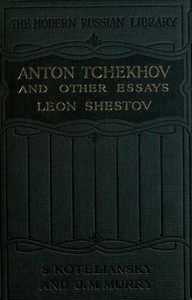
Anton Tchekhov, and Other Essays
Written by Lev Shestov
Chaptra reads alongside you — AI insights, chapter breakdowns and reader discussions for every book. Join free
About this book
Reading guide
Themes, characters and key ideas in Anton Tchekhov, and Other Essays, written by Chaptra AI.
- about 12 hours
- advanced
- philosophical
- existential
- somber
Lev Shestov's "Anton Tchekhov, and Other Essays" is a profound collection of philosophical essays that re-evaluates the work of Anton Tchekhov through an existential lens. Shestov argues that Tchekhov, often misunderstood, was a relentless exposer of human suffering and the inherent futility of conventional hopes and aspirations. The book delves into the philosophical dilemmas arising from human despair and the search for meaning in an indifferent world, positioning Tchekhov not as a provider of solace but as a truth-seeker who unveils life's painful realities. Through his sharp analysis, Shestov connects Tchekhov's literary insights to broader questions of existence, disillusionment, and the true purpose of artistic creation.
“Tchekhov is often misunderstood, for his work critiques the very hopes that prop up human existence.”
Key themes
- Existential Despair and Hopelessness
- This is the cornerstone of Shestov's analysis. He argues that Tchekhov's work is not merely melancholic but deeply imbued with a sense of existential despair, portraying characters consumed by disillusionment and helplessness. Shestov interprets Tchekhov as an artist who unflinchingly confronts the inherent meaninglessness and suffering of human existence, refusing to offer comforting illusions. This theme explores the confrontation with an indifferent universe and the struggle to find meaning when traditional sources of hope are revealed as futile.
- Critique of Hope and Illusions
- Shestov posits that Tchekhov's work actively critiques and undermines the very hopes and aspirations that human beings cling to for comfort and meaning. This theme explores how Tchekhov, through his literary creations, exposes the 'futile nature' of these hopes, suggesting that they are often self-deceptive or ultimately unachievable. It's a challenge to the idea that life must have an inherent positive trajectory or that suffering will inevitably lead to redemption or understanding. Shestov sees Tchekhov as stripping away these illusions.
- Human Suffering and Indifference
- Shestov emphasizes Tchekhov's focus on 'human suffering' and the 'philosophical dilemmas that arise from human suffering.' This theme explores the pervasive presence of pain, loss, and hardship in human life, often depicted as occurring in a 'seemingly indifferent world.' Shestov highlights how Tchekhov's protagonists grapple with these realities without finding easy answers or divine intervention, underscoring the raw, unmitigated experience of pain and the universe's lack of concern for it. It's about the individual's struggle against overwhelming and impersonal forces.
Worth discussing
How does Shestov's interpretation of Tchekhov challenge conventional understandings of the author's work?
Chapter-by-chapter breakdowns, character arcs and the full thematic analysis come with a free account.
Discussions
No one has started one yet
Questions this book opens up
No discussions yet
Be the first to start a discussion about this book!
Sign up to start the discussionReviews
No reviews yet
Be the first to review this book!