
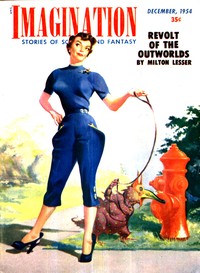
And All the Girls Were Nude
Written by Richard Magruder
Chaptra reads alongside you — AI insights, chapter breakdowns and reader discussions for every book. Join free
About this book
Reading guide
Themes, characters and key ideas in And All the Girls Were Nude, written by Chaptra AI.
- about 1 hours
- intermediate
- humorous
- satirical
- absurd
Richard Magruder's "And All the Girls Were Nude" is a mid-20th-century satirical short story centered on Nathanial Evergood, an eccentric old man consumed by his voyeuristic obsession with photographing undressed young women. His unique invention, a lens allowing him to perceive others without clothing while masking it from them, fuels his deviant pursuits. However, his increasing reliance on this device leads to a comedic and ironic downfall when he forgets to dress himself in public, resulting in his arrest and trial. The narrative critiques societal norms regarding decency, privacy, and the often-hypocritical condemnation of desires that society itself might implicitly foster.
“"Nathanial's lens offered not merely a view, but a philosophy: the world, stripped bare, yet blissfully unaware of its own transparency."”
Key themes
- Voyeurism and Obsession
- The central theme revolves around Nathanial's intense, consuming obsession with voyeurism, facilitated by his invention. It explores the psychological drive behind the desire to see what is hidden and the potential for such fixations to warp an individual's perception of reality and societal norms.
- Societal Hypocrisy and Morality
- The story critiques the often-hypocritical moral standards of society, particularly regarding public decency and sexual desire. It highlights how society simultaneously creates an environment where certain desires can fester (through media, cultural norms) while vehemently condemning their open expression.
- Privacy vs. Public Decency
- This theme explores the tension between an individual's right to privacy (or private deviance) and the collective expectation of public decency. Nathanial's story brings this conflict to a head, illustrating what happens when personal perception clashes with shared social contracts.
Worth discussing
How does Magruder use the special lens as a metaphor for voyeurism and perception in society?
Chapter-by-chapter breakdowns, character arcs and the full thematic analysis come with a free account.
Discussions
No one has started one yet
Questions this book opens up
No discussions yet
Be the first to start a discussion about this book!
Sign up to start the discussionReviews
No reviews yet
Be the first to review this book!