
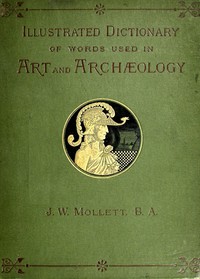
An Illustrated Dictionary of Words used in Art and Archaeology: Explaining terms frequently used in works on architecture, arms, bronzes, Christian art, colour, costume, decoration, devices, emblems, heraldry, lace, personal ornaments, pottery, painting, sculpture, &c., with their derivations.
Written by John W. (John William) Mollett
Chaptra reads alongside you — AI insights, chapter breakdowns and reader discussions for every book. Join free
About this book
Reading guide
Themes, characters and key ideas in An Illustrated Dictionary of Words used in Art and Archaeology: Explaining terms frequently used in works on architecture, arms, bronzes, Christian art, colour, costume, decoration, devices, emblems, heraldry, lace, personal ornaments, pottery, painting, sculpture, &c., with their derivations., written by Chaptra AI.
- about 100 hours
- advanced
- Informative
- Academic
- Precise
John W. Mollett's "An Illustrated Dictionary of Words used in Art and Archaeology" is a late 19th-century seminal reference work designed to clarify specialized terminology across a vast array of artistic and archaeological disciplines. Originating from an amended French dictionary, Mollett's ambitious project meticulously compiles definitions from authoritative sources, incorporating extensive illustrations to enhance understanding. It serves as an indispensable guide for students, scholars, and enthusiasts, aiming to provide a comprehensive and precise lexicon for the complex language of art history and material culture. The dictionary's enduring value lies in its detailed explanations and its role in standardizing the vocabulary of these fields during a period of significant academic growth.
“"This Dictionary, as originally commenced, was an amended edition of a small French work by M. Ernest Bosc; but the amount of fresh matter, both in the text and the illustrations, has been so great, that the present work may be considered an entirely new one."”
Key themes
- Precision in Language and Terminology
- The foundational theme of the dictionary is the imperative to define and standardize specialized vocabulary. Mollett's work emphasizes that accurate and consistent terminology is crucial for clear communication, effective scholarship, and the advancement of knowledge in complex fields like art and archaeology. Each entry meticulously attempts to provide the most precise definition, often distinguishing between subtly different uses of terms and their historical evolution.
- Interdisciplinary Connection and Scope
- Mollett's dictionary explicitly bridges numerous artistic and archaeological disciplines, highlighting the inherent interconnectedness of human creative and material culture. It demonstrates that understanding a term in architecture might require knowledge of historical decoration, or that an archaeological find can profoundly inform art historical interpretation. This theme underscores the holistic nature of cultural study, advocating for an integrated approach to understanding human endeavors.
- Preservation and Dissemination of Knowledge
- The act of compiling such a dictionary is fundamentally about collecting, preserving, and making accessible a vast body of specialized knowledge. It serves as a repository for terms that might otherwise be obscure or lost to the general reader, ensuring their continued understanding and use in scholarly and amateur contexts. This theme speaks to the scholarly responsibility of documenting, curating, and transmitting cultural heritage across generations and diverse audiences.
Worth discussing
How does Mollett's dictionary reflect the state of art and archaeological scholarship in the late 19th century, particularly regarding its scope and methodology?
Chapter-by-chapter breakdowns, character arcs and the full thematic analysis come with a free account.
Discussions
No one has started one yet
Questions this book opens up
No discussions yet
Be the first to start a discussion about this book!
Sign up to start the discussionReviews
No reviews yet
Be the first to review this book!