
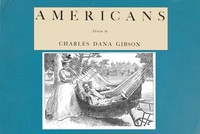
Americans, Drawn by Charles Dana Gibson
Written by Charles Dana Gibson
Chaptra reads alongside you — AI insights, chapter breakdowns and reader discussions for every book. Join free
About this book
Reading guide
Themes, characters and key ideas in Americans, Drawn by Charles Dana Gibson, written by Chaptra AI.
- about 8 hours
- intermediate
- humorous
- nostalgic
- satirical
Americans, Drawn by Charles Dana Gibson is a seminal collection of early 20th-century illustrations that offers a witty and incisive visual commentary on American society. Through eighty-four distinct cartoons, Gibson masterfully captures the social norms, evolving fashion, and intricate dynamics of relationships between men and women of the era. The book serves as a humorous yet insightful historical document, reflecting the cultural landscape, aspirations, and daily lives of a diverse range of Americans. It particularly highlights the iconic 'Gibson Girl' and the societal expectations placed upon individuals, all presented with the artist's characteristic elegance and satirical edge, providing a charming and critical look at a bygone era.
“The book's primary 'quotes' are visual, conveyed through expressions, body language, and symbolic details within the drawings themselves. Any textual elements are captions, which serve as punchlines or contextualizers. For example, a common implied 'quote' might be a young woman's determined gaze suggesting independence, or a man's exasperated expression indicating the trials of courtship.”
Key themes
- Gender Roles and the 'New Woman'
- This theme is central to the collection, exploring the evolving roles and expectations of women in early 20th-century America. Gibson portrays the 'Gibson Girl' as independent, athletic, and intelligent, challenging traditional notions of female fragility and domesticity. However, the illustrations also subtly acknowledge the persistent societal pressure for women to marry and manage a household, creating a tension between emerging autonomy and established norms.
- Courtship, Romance, and Marriage
- A pervasive theme, Gibson's cartoons frequently depict the rituals, humor, and complexities of romantic relationships and the journey towards marriage. He satirizes the elaborate dance of courtship, the earnestness of suitors, the strategic maneuvering of socialites, and the emotional highs and lows involved in finding a partner. The illustrations often highlight the power dynamics inherent in these interactions.
- Social Class and Etiquette
- Gibson's work provides a keen observation of the social hierarchies and strict codes of etiquette prevalent among the American upper and aspiring middle classes. The illustrations subtly comment on wealth, status, and the importance of 'proper' behavior in public and private settings. They often highlight the aspirations of individuals to climb the social ladder or maintain their position.
Worth discussing
How do Gibson's illustrations reflect and possibly influence the ideals of beauty and femininity in the early 20th century, particularly through the 'Gibson Girl'?
Chapter-by-chapter breakdowns, character arcs and the full thematic analysis come with a free account.
Discussions
No one has started one yet
Questions this book opens up
No discussions yet
Be the first to start a discussion about this book!
Sign up to start the discussionReviews
No reviews yet
Be the first to review this book!