
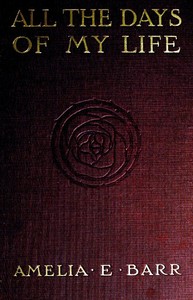
All the Days of My Life: An Autobiography: The Red Leaves of a Human Heart
Written by Amelia E. Barr
Chaptra reads alongside you — AI insights, chapter breakdowns and reader discussions for every book. Join free
About this book
Reading guide
Themes, characters and key ideas in All the Days of My Life: An Autobiography: The Red Leaves of a Human Heart, written by Chaptra AI.
- about 8 hours
- intermediate
- introspective
- reflective
- historical
Amelia E. Barr's "All the Days of My Life" is an early 20th-century autobiography offering a profound journey through her life from childhood in England to her mature years. Barr meticulously chronicles the events, emotions, and transformations that shaped her identity, emphasizing her family and the prevailing socio-cultural environment. Driven by a desire to clarify misconceptions and connect with other women, she employs a strong, introspective voice to delve into her spiritual contemplations on life, death, and women's roles. The work stands as a testament to personal resilience, offering readers a rich tapestry of memories and insights into a bygone era, while resonating with universal themes of self-discovery and human experience.
“To write of oneself is a task both intimate and daunting, yet there are truths that demand utterance, not merely for personal clarity but for the quiet strength they might lend to another.”
Key themes
- Personal Identity and Self-Discovery
- This theme is central to Barr's autobiography, as she meticulously chronicles her life not just as a series of events, but as a journey of continuous self-formation. She explores how her early experiences, family, and environment shaped her, and how she actively grappled with and transformed her perspectives to forge a unique identity. The act of writing the autobiography itself is presented as a final stage of this self-discovery, clarifying her own narrative.
- Women's Roles and Societal Expectations
- Barr's autobiography provides a significant lens through which to view the experiences of women in the late 19th and early 20th centuries. She reflects on the 'societal norms surrounding her' and implicitly or explicitly addresses the constraints, expectations, and opportunities available to women. Her desire to 'connect with women who may find strength and comfort in her experiences' underscores her engagement with this theme, positioning her narrative as a source of empowerment.
- Memory and the Act of Autobiography
- Barr's work is not merely a collection of memories, but an active engagement with the nature of memory itself and the purpose of autobiographical writing. She uses her 'rich recollections' as a tool for understanding her own development and for constructing a narrative that serves a specific purpose – clarifying her life and connecting with others. The very act of writing is presented as a reflective, interpretive process.
Worth discussing
How does Barr's stated purpose for writing her autobiography – clarifying misconceptions and connecting with women – shape her narrative choices and tone?
Chapter-by-chapter breakdowns, character arcs and the full thematic analysis come with a free account.
Discussions
No one has started one yet
Questions this book opens up
No discussions yet
Be the first to start a discussion about this book!
Sign up to start the discussionReviews
No reviews yet
Be the first to review this book!