
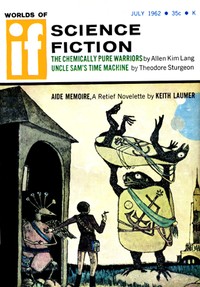
All That Earthly Remains
Written by C. C. MacApp
Chaptra reads alongside you — AI insights, chapter breakdowns and reader discussions for every book. Join free
About this book
Reading guide
Themes, characters and key ideas in All That Earthly Remains, written by Chaptra AI.
- about 8 hours
- intermediate
- mysterious
- philosophical
- tense
C. C. MacApp's "All That Earthly Remains" is a 1960s science fiction novel that delves into a profound mystery triggered by a nuclear explosion in the remote Andes. Nuclear physicist Dr. Luis Craig leads an expedition into ancient tunnels uncovered by the blast, seeking answers that transcend conventional science. The journey brings him into conflict with a priest, Brulieres, as they encounter a sentient, glowing entity connected to both ancient myths and destructive technology. The narrative culminates in a complex philosophical confrontation, forcing the characters to reconcile scientific understanding with spiritual beliefs and grapple with humanity's place in the cosmos.
“"The universe does not care for our definitions, Father. It simply is, and we must measure it, not merely believe in it."”
Key themes
- Science vs. Spirituality/Faith
- This is the central thematic conflict, explored through the debates and interactions between Dr. Luis Craig (science) and Father Brulieres (faith). The novel questions whether these two modes of understanding are mutually exclusive or if there's a point of convergence when confronted with phenomena that defy easy categorization.
- Ancient Civilizations & Extraterrestrial Contact
- The core mystery of the novel revolves around the discovery of ancient tunnels and an intelligent entity, suggesting a profound, hidden history of Earth and a connection to advanced, possibly extraterrestrial, life forms. This theme explores humanity's origins and its potential place within a larger cosmic order.
- Humanity's Place in the Cosmos
- By encountering an ancient, intelligent, and possibly extraterrestrial entity, the characters are forced to re-evaluate humanity's unique status and significance. The novel prompts existential reflections on whether humanity is alone, its true origins, and its ultimate purpose in the vastness of the universe.
Worth discussing
How does the novel explore the tension between scientific inquiry and spiritual belief? Which character's perspective do you find most compelling, and why?
Chapter-by-chapter breakdowns, character arcs and the full thematic analysis come with a free account.
Discussions
No one has started one yet
Questions this book opens up
No discussions yet
Be the first to start a discussion about this book!
Sign up to start the discussionReviews
No reviews yet
Be the first to review this book!