
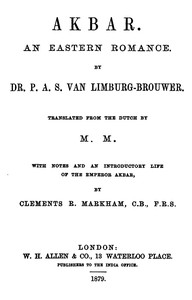
Akbar: An Eastern Romance
Written by P. A. S. van (Petrus Abraham Samuel) Limburg Brouwer
Chaptra reads alongside you — AI insights, chapter breakdowns and reader discussions for every book. Join free
About this book
Reading guide
Themes, characters and key ideas in Akbar: An Eastern Romance, written by Chaptra AI.
- about 12 hours
- intermediate
- historical
- romantic
- philosophical
P. A. S. van Limburg Brouwer's "Akbar: An Eastern Romance" is a late 19th-century historical novel that delves into the life and reign of Emperor Akbar through the eyes of fictional characters. The narrative follows young nobleman Siddha Rama as he transitions from a secluded life under the guidance of the wise hermit Gurupada to the complex political and social landscape of Akbar's imperial court in Agra. Alongside his betrothed, Iravati, Siddha navigates themes of loyalty, ambition, and duty, experiencing personal growth against the vibrant backdrop of 16th-century India. The novel explores the cultural dynamics and moral dilemmas inherent in power, love, and service within a grand historical setting.
Key themes
- Loyalty vs. Ambition
- This theme explores the inherent tension between personal aspirations and the duty owed to one's ruler, family, or principles. Siddha Rama's journey is a constant negotiation between his desire for advancement and his commitment to ethical conduct and faithfulness.
- The Grandeur and Complexity of Empire
- The novel portrays the Mughal Empire under Akbar as a magnificent but intricate entity, characterized by both its cultural richness and its political intrigues. It highlights the challenges of governing a diverse populace and maintaining stability amidst competing interests.
- Wisdom and Morality
- The novel emphasizes the importance of moral guidance and philosophical wisdom in navigating the complexities of life and power. Gurupada's teachings serve as a foundational element, contrasting with the often-unethical realities of the court.
Worth discussing
How does the novel balance historical accuracy with romanticized fiction in its portrayal of Akbar's reign?
Chapter-by-chapter breakdowns, character arcs and the full thematic analysis come with a free account.
Discussions
No one has started one yet
Questions this book opens up
No discussions yet
Be the first to start a discussion about this book!
Sign up to start the discussionReviews
No reviews yet
Be the first to review this book!