
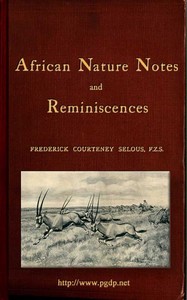
African Nature Notes and Reminiscences
Written by Frederick Courteney Selous
Chaptra reads alongside you — AI insights, chapter breakdowns and reader discussions for every book. Join free
About this book
Reading guide
Themes, characters and key ideas in African Nature Notes and Reminiscences, written by Chaptra AI.
- about 12 hours
- intermediate
- observational
- adventurous
- historical
Frederick Courteney Selous's "African Nature Notes and Reminiscences" is a seminal work of early 20th-century natural history, blending meticulous observation with personal adventure. Encouraged by Theodore Roosevelt, Selous compiles a lifetime of experiences in the South African wilderness, offering deep insights into the behavior and characteristics of its diverse big game animals. The book transcends mere hunting narratives, aiming to provide a comprehensive understanding of the African ecosystem through the eyes of a seasoned observer. It serves as both a historical record of a rapidly changing landscape and a testament to the author's profound respect for the wild creatures he encountered.
“"It is only by constant observation, by patiently watching and waiting, that one can hope to gain any real insight into the lives of the wild creatures of the earth."”
Key themes
- Human-Wildlife Relationship
- This theme explores the multifaceted interactions between humans (specifically Selous and other hunters/explorers) and the wild animals of Africa. Selous navigates the complex roles of observer, hunter, and admirer, often expressing deep respect and understanding for the creatures he pursues. The book implicitly questions the ethical boundaries of these interactions and the responsibility humans bear towards the natural world.
- The Vanishing Wilderness and Conservation
- Although written before the widespread modern conservation movement, Selous's observations implicitly highlight the fragility of the African wilderness. His detailed documentation of species and their habitats serves as a historical record, often tinged with a melancholy awareness that such pristine conditions and abundant wildlife might not last. The encouragement from Theodore Roosevelt, a prominent conservationist, further underscores this nascent theme.
- The Value of Firsthand Observation and Natural History
- A core tenet of the book is Selous's insistence on the primacy of direct, accurate observation in understanding the natural world. He often critiques 'armchair naturalists' and sensationalized accounts, emphasizing that true knowledge comes from patient, often dangerous, fieldwork. This theme elevates the book from mere adventure stories to a serious contribution to natural science.
Worth discussing
How does Selous's approach to natural history differ from modern ecological studies, and what are the strengths and weaknesses of his methodology?
Chapter-by-chapter breakdowns, character arcs and the full thematic analysis come with a free account.
Discussions
No one has started one yet
Questions this book opens up
No discussions yet
Be the first to start a discussion about this book!
Sign up to start the discussionReviews
No reviews yet
Be the first to review this book!