
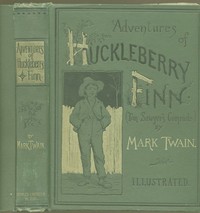
Adventures of Huckleberry Finn
Written by Mark Twain
Chaptra reads alongside you — AI insights, chapter breakdowns and reader discussions for every book. Join free
About this book
Read it with a club
Small groups reading the same books and talking as they go.


News
- 4 members
- 1,813 discussions
- Active Sep 11
Read Adventures of Huckleberry Finn alongside people who are reading it too.
Also here: News Bulletin, Just Joking....
Chaptra Prime — paid clubs, every club feature, and unlimited reading support, for $5 a month or $60 once.
See PrimeReading guide
Themes, characters and key ideas in Adventures of Huckleberry Finn, written by Chaptra AI.
- about 10 hours
- advanced
- adventurous
- satirical
- poignant
Mark Twain's "Adventures of Huckleberry Finn" is a picaresque novel that chronicles the journey of young Huckleberry Finn, a runaway boy, and Jim, an escaped slave, down the Mississippi River. Fleeing abusive environments and the constraints of a hypocritical society, Huck undergoes a profound moral awakening as he grapples with the prevailing prejudices of the antebellum South. The novel satirizes civilization, religion, and racism, presenting a powerful indictment of human nature and societal norms through Huck's innocent yet discerning eyes. It is a coming-of-age story that explores themes of freedom, conscience, and the true meaning of humanity.
“"All right, then, I'll go to hell."”
Key themes
- Racism and Slavery
- The most central theme, explored through the institution of slavery and the pervasive racism of the antebellum South. Twain uses Huck's journey with Jim to expose the dehumanizing effects of slavery and to critique the societal norms that uphold it. Jim's character, intelligence, and humanity directly challenge the prejudiced views of the time.
- Moral and Ethical Development
- This theme focuses on Huck's growth from a naive boy to an individual with a strong, independent moral compass. His journey is one of internal conflict, where he learns to trust his own conscience over the often-corrupt moral teachings of society and conventional religion.
- Freedom and Confinement
- The novel explores various forms of freedom (physical, intellectual, moral) and confinement (slavery, societal expectations, abusive relationships). Both Huck and Jim are seeking freedom, though their definitions and paths differ significantly. The river symbolizes a temporary escape from societal constraints.
Worth discussing
Discuss Huck's moral development. What are the key moments that shape his understanding of right and wrong, particularly regarding Jim?
Chapter-by-chapter breakdowns, character arcs and the full thematic analysis come with a free account.
Discussions
No one has started one yet
Questions this book opens up
No discussions yet
Be the first to start a discussion about this book!
Sign up to start the discussionReviews
No reviews yet
Be the first to review this book!