
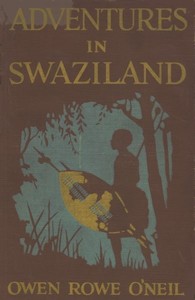
Adventures in Swaziland: The Story of a South African Boer
Written by Owen Rowe O'Neil
Chaptra reads alongside you — AI insights, chapter breakdowns and reader discussions for every book. Join free
About this book
Reading guide
Themes, characters and key ideas in Adventures in Swaziland: The Story of a South African Boer, written by Chaptra AI.
- about 8 hours
- intermediate
- Historical
- Adventurous
- Cultural
Owen Rowe O'Neil's "Adventures in Swaziland" is an early 20th-century historical narrative chronicling the author's youthful journey into Swaziland. As a young South African Boer, O'Neil provides a firsthand account of the cultural interactions, political complexities, and daily life during a tumultuous period marked by migration, conflict, and burgeoning colonial influences in Southern Africa. The book particularly focuses on his encounters with the Swazi royal family, including King Buno and Queen Labotsibeni, and illuminates the intricate relationship between the Boer community and the Swazi nation. Through the lens of personal adventure, O'Neil offers a valuable, albeit subjective, historical record of a pivotal era and a unique perspective on the region's diverse cultures.
“The vastness of Swaziland stretched before me, a tapestry woven with ancient traditions and the looming shadow of a new world.”
Key themes
- Colonialism and Indigenous Sovereignty
- The book vividly explores the complex interplay between emerging colonial influences and the enduring sovereignty of the Swazi nation. It details the political dynamics, including the delivery of tributes and the role of figures like Oom Tuys, illustrating the delicate balance of power and negotiation between the Boers and the Swazi royal family amidst broader imperial pressures. This theme highlights the struggles of indigenous peoples to maintain their autonomy in the face of European expansion.
- Cultural Encounter and Identity
- O'Neil's journey is fundamentally an exploration of cultural encounter. The narrative delves into the author's observations of Swazi culture, customs, and daily life, contrasting them with his own Boer identity. It examines how these different cultures interacted, sometimes harmoniously, sometimes with friction, and how such encounters shaped the individual and collective identities of the people involved. The theme also touches on the author's own understanding of his 'South African Boer' identity in a diverse region.
- Historical Witness and Memory
- The book functions as a primary historical document, offering a personal account of a specific period in Southern African history. The theme addresses the importance of individual narratives in constructing collective memory and understanding past events. O'Neil's role as an 'eyewitness' to the interactions between Boers, Swazis, and colonial forces highlights the subjective nature of history and the value of personal testimony in historical reconstruction.
Worth discussing
How does O'Neil's perspective as a young Boer shape his observations of Swazi culture and politics?
Chapter-by-chapter breakdowns, character arcs and the full thematic analysis come with a free account.
Discussions
No one has started one yet
Questions this book opens up
No discussions yet
Be the first to start a discussion about this book!
Sign up to start the discussionReviews
No reviews yet
Be the first to review this book!