
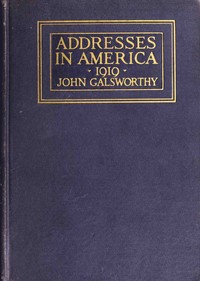
Addresses in America, 1919
Written by John Galsworthy
Chaptra reads alongside you — AI insights, chapter breakdowns and reader discussions for every book. Join free
About this book
Reading guide
Themes, characters and key ideas in Addresses in America, 1919, written by Chaptra AI.
- about 8 hours
- advanced
- Reflective
- Inspirational
- Formal
Addresses in America, 1919" compiles John Galsworthy's pivotal post-World War I speeches, primarily focusing on the enduring cultural and linguistic ties between English-speaking nations. Galsworthy explores how shared language and literary heritage can bridge divides, advocating for international understanding over divisive nationalism. The collection begins with a tribute to New England writers, particularly James Russell Lowell, emphasizing the need for moral and artistic integrity in a world grappling with the aftermath of war. Ultimately, Galsworthy articulates a vision for post-war societies united through mutual respect, democratic ideals, and the transformative power of the arts.
“Language is more than a mere vehicle of thought; it is a repository of shared experience, a bridge built of sound and sense, connecting the souls of nations.”
Key themes
- Shared Language and Cultural Connection
- Galsworthy posits that the English language and a common literary heritage serve as a powerful, inherent link between nations, particularly Britain and America. He argues that this shared cultural foundation fosters mutual understanding and empathy, acting as a bulwark against division and a catalyst for cooperation. The exploration of this theme often centers on specific literary figures and their contributions to a collective intellectual identity.
- Internationalism vs. Nationalism
- A core theme is Galsworthy's ardent advocacy for international understanding and cooperation as a counterpoint to the destructive forces of nationalism. Writing shortly after World War I, he keenly observes the perils of insular nationalistic ideologies and champions a vision where nations unite through shared values and mutual respect, rather than succumbing to isolation and conflict.
- Role of Arts and Literature in Society
- Galsworthy places significant emphasis on the moral and societal function of art and literature. He views them not merely as forms of entertainment but as essential tools for cultural expression, ethical guidance, and fostering empathy. For Galsworthy, the arts hold the power to elevate public discourse, inspire higher ideals, and remind humanity of its shared spiritual and intellectual heritage.
Worth discussing
How does Galsworthy argue for language as a 'bridge' between nations, and what relevance does this concept have in today's globalized world?
Chapter-by-chapter breakdowns, character arcs and the full thematic analysis come with a free account.
Discussions
No one has started one yet
Questions this book opens up
No discussions yet
Be the first to start a discussion about this book!
Sign up to start the discussionReviews
No reviews yet
Be the first to review this book!