
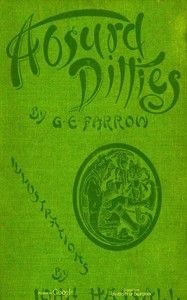
Absurd Ditties
Written by G. E. (George Edward) Farrow
Chaptra reads alongside you — AI insights, chapter breakdowns and reader discussions for every book. Join free
About this book
Reading guide
Themes, characters and key ideas in Absurd Ditties, written by Chaptra AI.
- about 8 hours
- intermediate
- humorous
- whimsical
- lighthearted
G. E. Farrow's "Absurd Ditties" is a delightful early 20th-century collection of humorous poetry that revels in the whimsical and nonsensical aspects of everyday life. Through clever verses and lighthearted narratives, Farrow introduces a diverse cast of characters, from lamenting judges and ill-fated wealthy men to playful animals, each embroiled in ludicrous situations. The poems blend sharp wit with gentle satire, often highlighting the ironies and oddities of human existence and societal norms. Ultimately, the collection serves as an engaging and entertaining celebration of life's inherent absurdities, inviting readers to find humor in unexpected places.
“"Poor Justice Dear, with nary a case, / His legal mind in a doleful space."”
Key themes
- The Absurdity of Life
- This is the central, overarching theme of the collection. Farrow consistently highlights how life often defies logic, presenting situations that are nonsensical, ironic, or utterly ridiculous. The poems celebrate this inherent absurdity, suggesting that humor is a valid and perhaps necessary response to the unpredictable nature of existence.
- The Irony of Fate and Fortune
- Farrow frequently explores how fate can be capricious and ironic, often delivering outcomes that are the opposite of what is expected or desired. Characters' aspirations or circumstances are often subverted in humorous and unexpected ways, highlighting the unpredictability of life's journey.
- Social Commentary and Human Foibles
- Through his whimsical characters and scenarios, Farrow offers gentle satire on various aspects of society and common human traits. He pokes fun at archetypes, professions, and social aspirations, revealing the inherent silliness or pretentiousness that can exist within human interactions and institutions. The commentary is light, observational, and never overly critical.
Worth discussing
How does Farrow use absurdity to comment on societal norms or human nature?
Chapter-by-chapter breakdowns, character arcs and the full thematic analysis come with a free account.
Discussions
No one has started one yet
Questions this book opens up
No discussions yet
Be the first to start a discussion about this book!
Sign up to start the discussionReviews
No reviews yet
Be the first to review this book!