
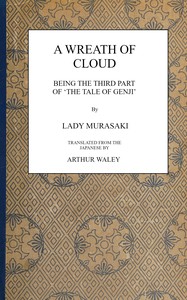
A wreath of cloud : $b Being the third part of 'The tale of Genji'
Written by Murasaki Shikibu
Chaptra reads alongside you — AI insights, chapter breakdowns and reader discussions for every book. Join free
About this book
Reading guide
Themes, characters and key ideas in A wreath of cloud : $b Being the third part of 'The tale of Genji', written by Chaptra AI.
- about 8 hours
- advanced
- melancholic
- romantic
- intricate
“A Wreath of Cloud” is the third installment of Murasaki Shikibu's seminal work, 'The Tale of Genji,' continuing the intricate saga of Prince Genji and the Heian court. This segment delves deeply into the emotional and social complexities faced by characters navigating the rigid hierarchies and delicate relationships of 11th-century Japan. It opens with the poignant sacrifice of the Lady of Akashi, who must relinquish her daughter to Genji's main consort, Lady Murasaki, to secure the child's prestigious future within the imperial court. The narrative then expands to encompass significant courtly events, including deaths, spiritual disturbances, and revelations of secret parentage, all against a backdrop of melancholic reflection on impermanence and duty. The book masterfully explores themes of love, loss, social obligation, and the profound beauty and sorrow inherent in human existence.
“"The world is a place of sorrow, and the more deeply one feels, the more keenly one suffers." (Representative of the 'mono no aware' theme)”
Key themes
- Mono no aware (The Pathos of Things)
- This central Japanese aesthetic and philosophical concept refers to the bittersweet awareness of the impermanence of all things, the gentle melancholy at the transience of life, beauty, and love. It imbues the narrative with a pervasive sense of wistfulness and a profound appreciation for fleeting moments.
- Court Intrigue and Social Hierarchy
- The novel meticulously details the rigid social structures of the Heian court, where rank, lineage, and political alliances dictate one's destiny. Characters constantly navigate these intricate hierarchies, making personal sacrifices and strategic decisions to secure or maintain status and influence for themselves and their descendants.
- Love, Loss, and Attachment
- The complex tapestry of human relationships, encompassing romantic love, familial bonds, and friendships, forms the emotional core of the narrative. The story delves into the joys and sorrows of attachment, the pain of parting, and the enduring nature of affection amidst the transient world.
Worth discussing
Discuss the concept of 'mono no aware' as it is portrayed in 'A Wreath of Cloud.' How do characters experience and express this awareness of impermanence?
Chapter-by-chapter breakdowns, character arcs and the full thematic analysis come with a free account.
Discussions
No one has started one yet
Questions this book opens up
No discussions yet
Be the first to start a discussion about this book!
Sign up to start the discussionReviews
No reviews yet
Be the first to review this book!